
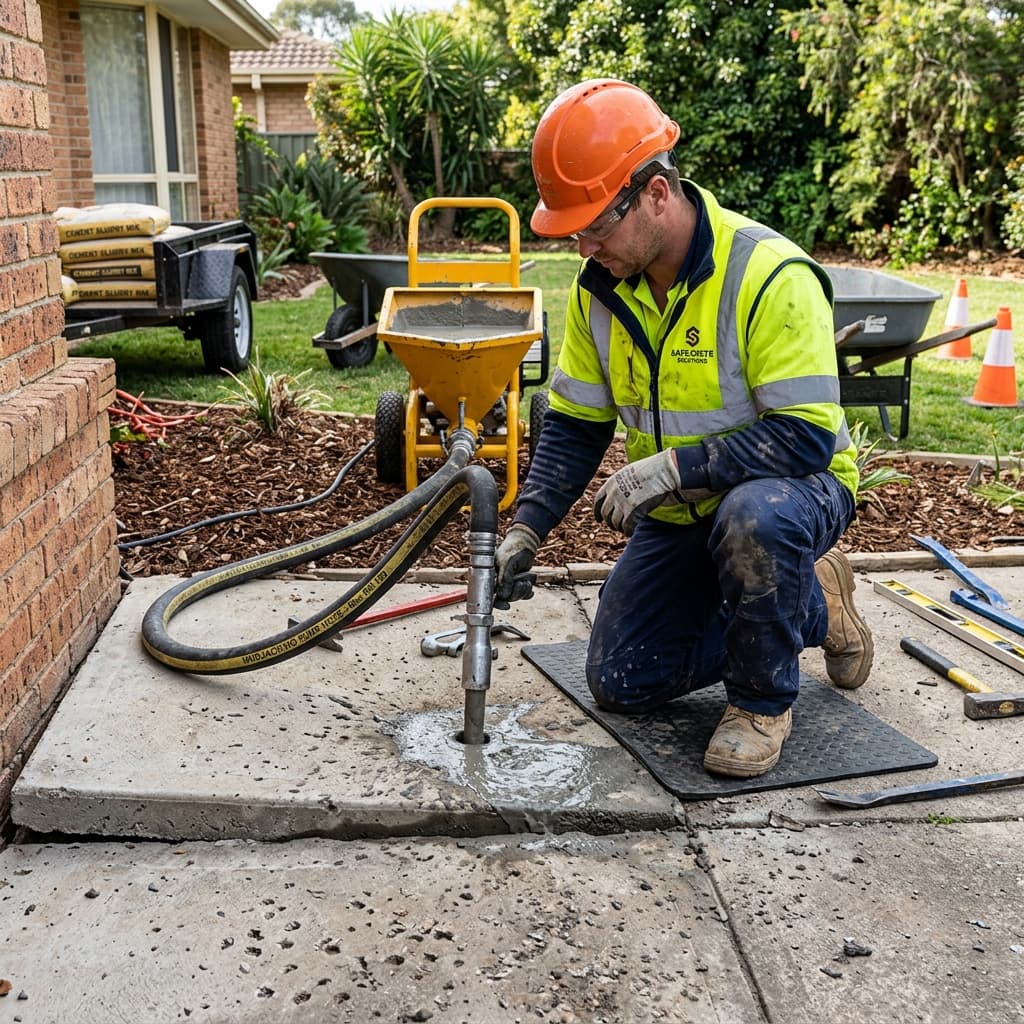
Sunken driveways, patios, and sidewalks are a trip hazard and an eyesore. Mudjacking can often restore them for 50–70% less than full replacement.
Table of Contents
Sunken concrete slabs — driveways, patios, sidewalks, pool decks — are a common problem in Southern California. The seasonal wet-dry cycle causes soil beneath slabs to consolidate and erode, leaving voids that cause the slab to drop.
What Is Mudjacking?
Mudjacking (also called slabjacking or concrete lifting) is the process of pumping a cement-based slurry beneath a sunken slab to fill voids and lift the concrete back to its original position.
The process:
- Drill 1–2 inch holes through the slab at strategic locations
- Pump slurry (a mix of cement, water, and soil) under pressure into the void
- Monitor the lift — stop when the slab reaches target level
- Patch the drill holes with matching concrete
- Done — typically in a few hours
When Mudjacking Makes Sense
Mudjacking is ideal when:
- The slab is structurally intact (not broken into pieces)
- Settlement was caused by a void or soft soil — not ongoing movement
- The slabs are relatively lightweight (residential, not heavy industrial)
- Cost is a consideration
Mudjacking vs. Polyurethane Foam Lifting
Polyurethane foam lifting ("polyjacking") is a newer alternative. It uses expanding foam instead of slurry. Foam is lighter, cures faster, and works in some situations where traditional mudjacking is impractical. However, it's typically more expensive.
At PiersPro, we evaluate which method fits your specific situation — not every job needs polyjacking, and sometimes traditional mudjacking is the better choice.
What We Can Lift
- Residential driveways and garage floors
- Patio slabs and pool decks
- Sidewalks and walkways
- Exterior stoops and entry slabs
- Warehouse and commercial floors (with appropriate equipment)