
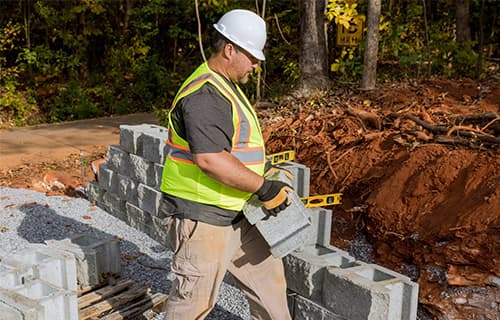
Many retaining wall failures are preventable. Learn the common construction mistakes that lead to wall failure — and what a properly built retaining wall requires.
Table of Contents
Retaining wall failures are one of the most dangerous — and most preventable — structural failures in residential construction. The reasons walls fail are well understood. Most failures trace back to one or more of a short list of design and construction errors.
The Most Common Causes of Retaining Wall Failure
1. Inadequate drainage
Hydrostatic pressure — water building up behind the wall — is the number one cause of retaining wall failure. A properly designed wall includes gravel backfill, filter fabric, and weep holes or drainage pipes to relieve this pressure. Without drainage, even a well-built wall will eventually fail.
2. Under-designed for actual loads
Many retaining walls are built without proper engineering. The soil load on a retaining wall increases dramatically with height — a 6-foot wall carries approximately 4x the load of a 3-foot wall. Height-appropriate engineering is not optional for walls over 3–4 feet.
3. Inadequate footing size or depth
The footing anchors the wall against sliding and overturning. Footings must extend below the frost line (not usually relevant in Southern California, but depth still matters) and be sized for the actual soil bearing capacity.
4. Poor backfill material
Filling behind a new wall with expansive clay is a mistake. Clay holds water and swells, creating pressure the wall was never designed to resist. Proper backfill uses clean, coarse-grained material.
5. Lack of reinforcement
Taller walls require internal steel reinforcement (rebar) to resist the bending forces imposed by retained soil. Unreinforced concrete or block walls fail in bending at loads that reinforced walls handle comfortably.
Red Flags During Construction
If you're watching a retaining wall being built on your property, watch for:
- No drainage pipe or gravel being installed behind the wall
- Footing depth under 18 inches
- No rebar visible in block or poured concrete walls over 4 feet
- Clay or excavated soil being used as backfill
- No engineered plans for walls over 4 feet
When to Replace vs. Repair
Minor cracking and leaning under 1–2 inches can sometimes be addressed with drainage improvement and anchoring. Significant lean, horizontal cracking, or bulging typically requires replacement. We provide an honest assessment — we won't sell you a replacement if repair will do the job.