
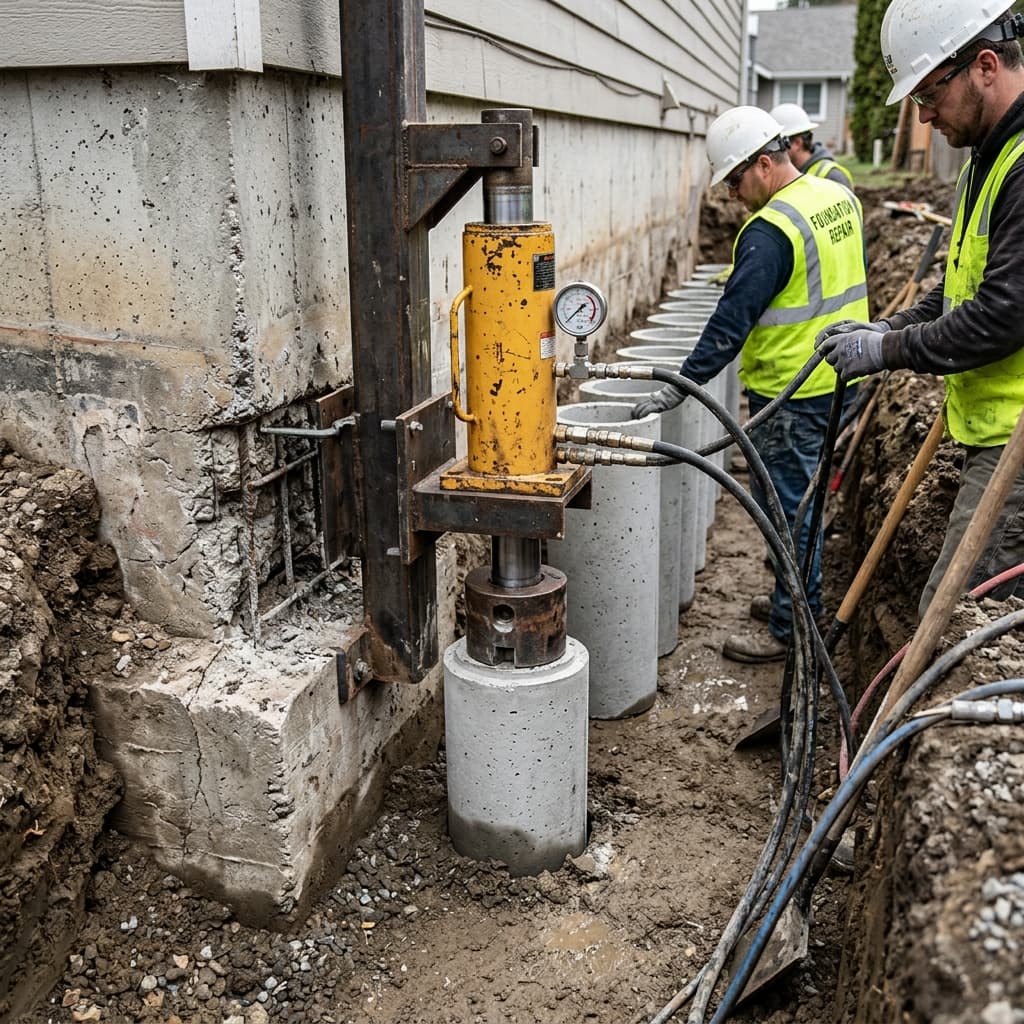
Pressed concrete piers are an economical foundation repair option common in certain soil conditions. Here's an honest comparison with helical and push piers.
Pressed concrete piers (also called segmented concrete piers or pressed pilings) are cylinders of pre-cast concrete that are hydraulically pressed into the ground beneath a foundation, using the building's weight as driving resistance.
How Pressed Concrete Piers Work
Sections of cylindrical concrete pier (typically 6 inches in diameter, 12 inches long) are stacked and pressed into the soil one at a time using a hydraulic ram. The pier advances until the ram pressure meets a specified resistance threshold, indicating adequate bearing capacity has been reached.
The Case For and Against
Advantages:
- Lower material cost than steel pier systems
- Straightforward installation
Limitations:
- Depth cannot be verified by torque monitoring (unlike helical piers)
- Perform poorly in expansive clay soils (common in Southern California)
- No lateral load resistance
- Can fail in soft or wet soil conditions
- Not suitable for hillside or seismically active locations
Our Honest Assessment
PiersPro primarily recommends helical piers for Southern California applications. The expansive clay soils, seismic activity, and hillside conditions common in LA and Orange County make steel deep foundation systems more reliable long-term.
That said, there are soil conditions and budget situations where pressed concrete piers may be appropriate. We'll tell you honestly which system fits your conditions — we don't push any single product.
Contact us for a instrumental diagnosis and an honest comparison of your options.