
Understand the warning signs of foundation settlement in Southern California. Learn how to detect diagonal cracks, sloping floors, and sticking doors before they lead to structural damage.
Table of Contents
Southern California home foundations operate under unique geological stresses. Our region’s clay-heavy soils swell during winter rains and contract during hot, dry summers. This cycle of soil expansion and contraction, combined with seismic tremors, puts continuous pressure on concrete slabs and crawl space footings. Over time, these forces can lead to foundation settlement—where portions of the home sink unevenly into the ground.
Detecting foundation settlement early is critical. Ignoring the initial warnings can turn a relatively simple pier stabilization project into a massive structural restoration involving collapsed walls and broken plumbing.
At PiersPro, operating under California General Contractor License #1110475, we help homeowners identify structural issues before they escalate. We follow a strict "No-Upsell" policy: if your home has normal cosmetic settling that doesn't threaten its structural integrity, we will tell you and won't recommend unnecessary work. In this guide, we will break down the top 5 signs of foundation problems and explain the engineering facts behind them.
The Top 5 Signs of Foundation Problems
Foundation movement manifests in different areas of your home. If you notice one or more of the following symptoms, your foundation may be settling:
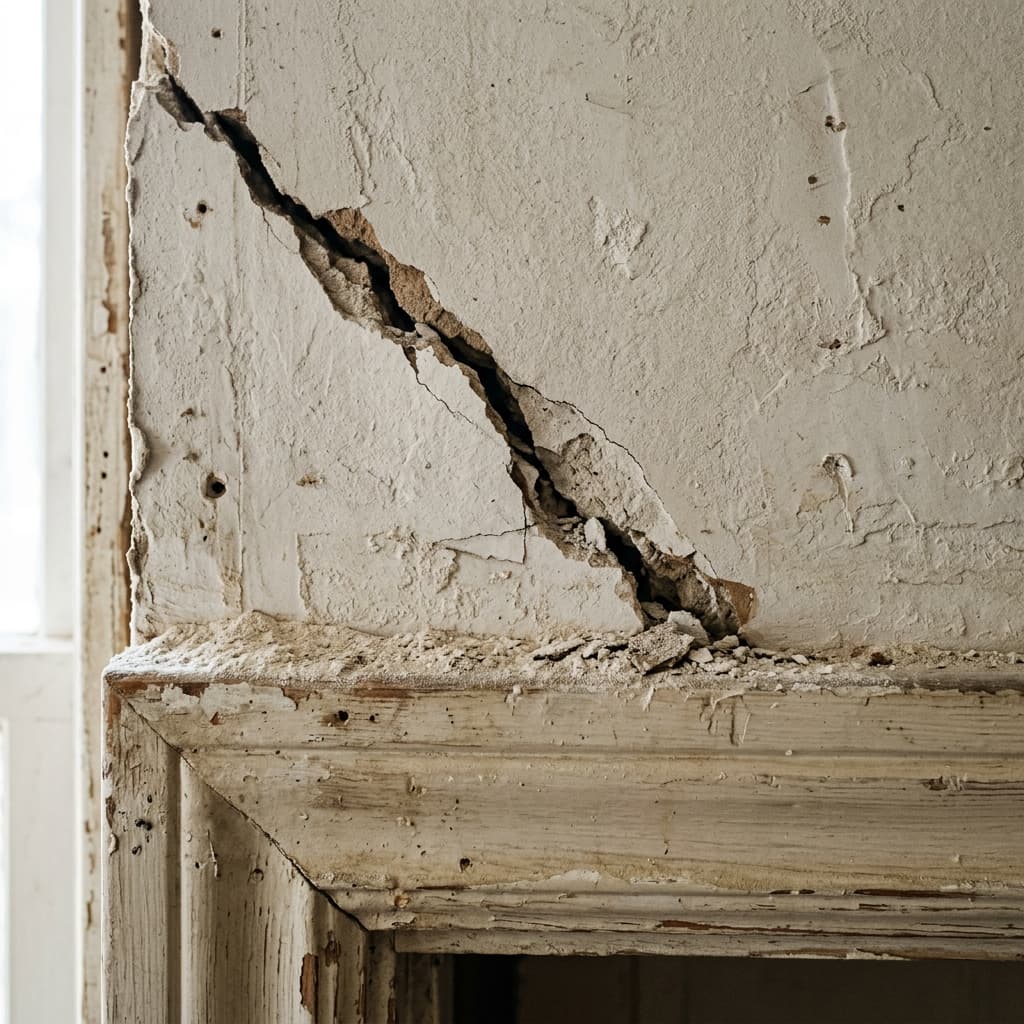
1. Diagonal Drywall Cracks (Particularly Above Frames)
Drywall is a rigid material with very little flexibility. When a foundation settles unevenly, it twists the wooden framing of the house. This tension transfers to the drywall, causing diagonal cracks to form, typically starting at the top corners of interior door and window frames and extending toward the ceiling.
* What to check: Cracks that are wider than 1/8-inch, diagonal, or showing signs of separation (one side of the crack sticking out further than the other).
2. Sticking Doors and Windows
As the home's framing shifts out of square due to settlement, the door and window openings become slightly diagonal (trapezoidal) rather than rectangular. This causes doors and windows to stick, jam, or scrape against their frames, or prevents latching mechanisms from aligning.
* What to check: Check if multiple doors or windows in the same area of the house began sticking suddenly or during dry summer months.
3. Sloping or Uneven Floors
When a portion of the foundation sinks, the joists and subflooring above tilt. This leads to sloping floors requiring foundation repair. In homes with raised foundations, you may also experience bouncy floors or soft spots if wooden support posts in the crawl space have rotted or shifted.
* What to check: If you place a level or a marble on a hard floor surface, does it roll consistently toward one corner of the room?
4. Exterior Stucco and Concrete Footing Cracks
Stucco is a cement-based coating applied to the exterior of many Southern California homes. Because stucco is brittle, it easily cracks when the foundation settles.
* What to check: Look for staircase-shaped cracks along the concrete foundation footing or diagonal cracks in the stucco near the corners of the house.
5. Separation Around Chimneys
Chimneys are built on their own concrete pads, which are separate from the main home foundation. Because chimneys are tall and heavy, they are highly vulnerable to settlement. If the chimney pad settles faster than the rest of the house, you will see a gap open up between the chimney brickwork and the home's exterior siding.
---
Mid-Content Call to Action
Do you see cracks or experience sticking doors in your home?
Don't guess about foundation safety. PiersPro offers a detailed $99 Instrumental Diagnostic featuring digital altimeter mapping and crawl space inspections. If repairs are needed, we credit the $99 back to your contract.
Book a Diagnostic Inspection or call (213) 583-6669 to speak with our structural specialists.
---
Technical Summary of Foundation Settlement
| Warning Sign | How to Detect It | Structural Meaning / Risk |
|---|---|---|
| Diagonal drywall cracks | Inspect corners of door/window frames | Framing is twisting due to differential settling. |
| Sticking doors/windows | Check if doors jam or rub against frames | Openings are out of square; framing load path is shifting. |
| Sloping/bouncy floors | Use a digital level or check marble roll | Foundation settlement cracks are causing framing deflection. |
| Staircase stucco cracks | Inspect exterior wall footings | Concrete footing is settling and shearing the stucco. |
| Chimney separation | Inspect gap between chimney and siding | The chimney pad is tilting or settling independently. |
E-E-A-T: Trustworthy Evaluations from PiersPro
At PiersPro, we operate under a strict "No-Upsell" policy. If our altimeter measurements show that your home's settlement is within normal, historic tolerances and does not require structural stabilization, we will give you a clean report and won't recommend any repairs. You can check our license status (License #1110475) at cslb.ca.gov and review our completed pier installations in our Projects section.
Frequently Asked Questions (FAQ)
Q1: What is the difference between normal settling and foundation problems?
A1: All homes experience minor, uniform settling as the building materials dry and adjust. This settling is typically minor and uniform. Foundation problems occur when one portion of the foundation settles faster than the rest (differential settlement), which twists the framing and causes drywall cracks and sticking doors.
Q2: What causes soil settlement in Southern California?
A2: The primary cause is clay soil expansion and contraction. During drought conditions, the clay soil shrinks and pulls away from the foundation footings, leaving voids. The weight of the house then presses the footing down into these voids.
Q3: How do we fix sloping floors?
A3: For homes with raised foundations, we can install new wood posts and adjust structural piers in the crawl space to level the floors. For slab foundations, we must lift the slab using steel helical piers or mudjacking.
Q4: How wide do foundation cracks have to be before they are a concern?
A4: Hairline cracks (under 1/16-inch) in drywall or stucco are typically cosmetic and can be patched. Cracks wider than 1/8-inch, diagonal cracks, or cracks that continue to grow over several months indicate active foundation movement and require an inspection.
Protect Your California Home
Catch foundation settlement early to secure your property and save on repairs. Trust the engineering experts at PiersPro to deliver honest, accurate diagnostics.
Contact PiersPro today. Call us at (213) 583-6669 or book your diagnostic online to schedule an inspection.