
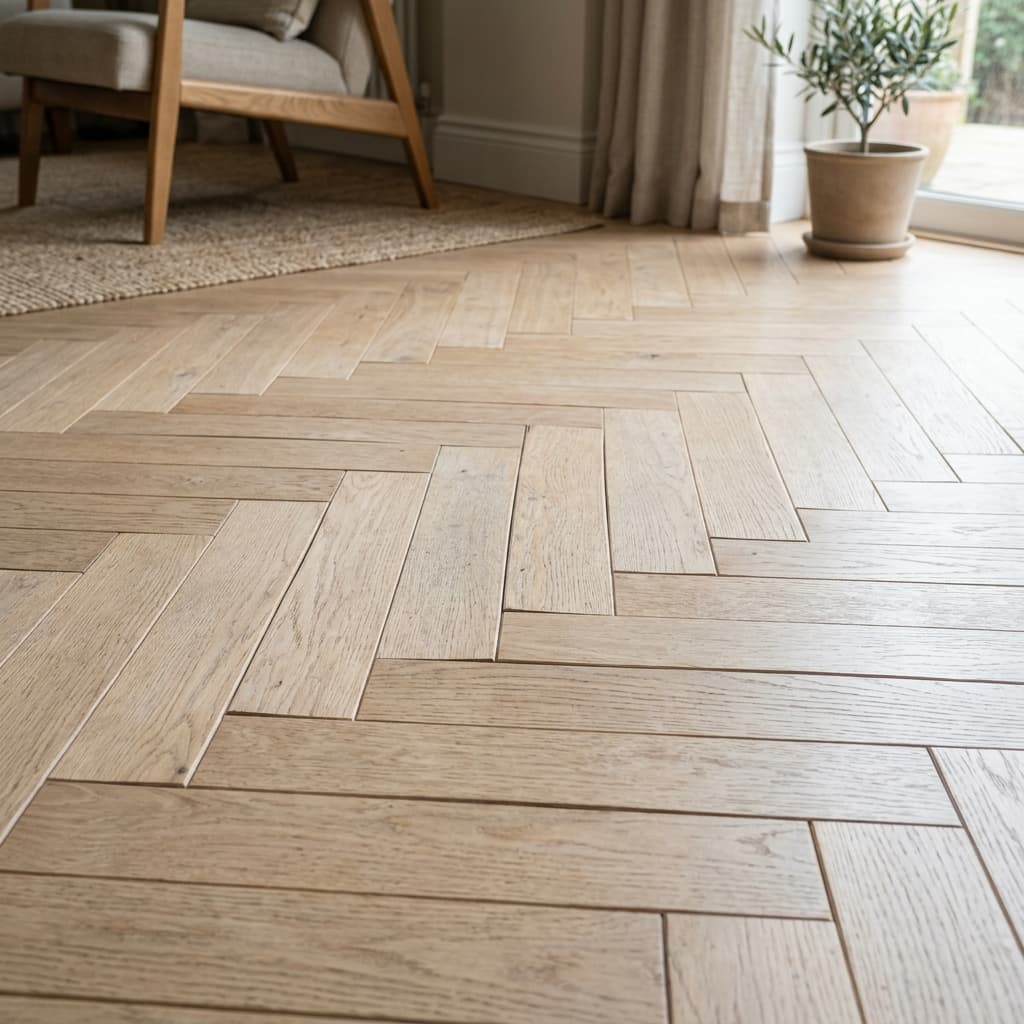
A case study of a home in Orange, CA, experiencing severe floor buckling due to concrete flatwork poured above the stucco weep screed, causing slab moisture.
Table of Contents
Have you noticed dark stains on your hardwood floor, or has your parquet started cupping and buckling? Many homeowners assume it is a simple leak, but the root cause could be a hidden structural violation on the exterior of your home.
This week, the PiersPro engineering team conducted a foundation inspection at a property on E Saint Germain Cir in Orange, CA 92869. Our inspection revealed a classic, yet severe, issue of high slab moisture content (27%) causing parquet floor failure.
The Symptoms: Hardwood Floor Staining and Buckling
During our on-site inspection, the homeowner pointed out localized dark staining on the parquet floor planks, accompanied by cupping (warping at the edges) and buckling (lifting off the subfloor).
Using professional moisture diagnostic equipment, we measured the concrete slab's moisture level at 27%—far exceeding the safe threshold for wood flooring. This high moisture level is the direct cause of the floor warping, as the wood planks absorb rising capillary water from the slab below.
The Root Cause: Blocked Stucco Weep Screed & Hydrostatic Pressure
The house is located on a hillside slope in Orange County. While there is a surface drainage system (storm drain) in place, our physical inspection revealed a major structural issue:
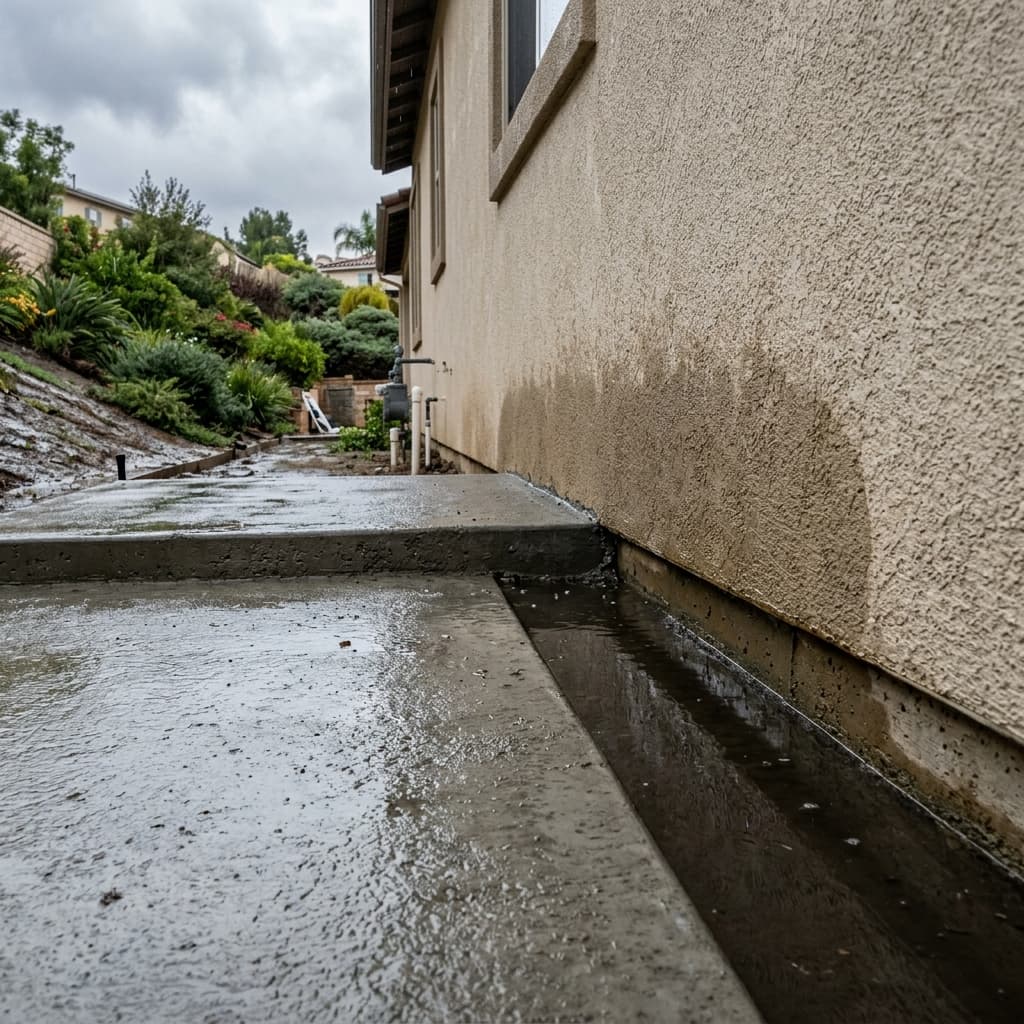
The exterior concrete flatwork (patio) was poured higher than the interior finished floor elevation.
This elevation mismatch completely encased and blocked the exterior stucco weep screed. Stucco is naturally porous and absorbs water; the weep screed is designed to let moisture escape from the bottom of the wall cavity. By covering it with concrete:
- Surface runoff from the uphill slope collects directly against the exterior stucco wall.
- The blocked drainage weep holes prevent water from escaping.
- Under hydrostatic pressure, water is forced through the cold joint (the seam where the wall frame meets the concrete slab) directly into the interior living area.
Remediation Options and Cost Estimates (California Pricing)
To resolve the slab moisture and secure the home's structural envelope, we proposed three remediation plans:
Option 1: Joint Sealing & Interior Vapor Barrier (Localized / Budget Option)
This option addresses the interior symptoms and halts active water intrusion through the wall seam without major excavation.
* Exterior Scope: Precision diamond-blade saw cutting of a 2–3 inch wide relief joint in the concrete flatwork along the exterior building envelope. Clean the wall-to-slab joint, install closed-cell backer rod, and seal with a high-performance polyurethane structural sealant (SikaFlex / NP1).
* Interior Scope (If Slab Cracks Are Found): Remove damaged flooring. If shrinkage or stress cracks are identified in the concrete slab, mechanical prep/etching and application of a 2-component epoxy moisture vapor barrier (100% solids epoxy) to seal cracks and block capillary moisture migration prior to installing new flooring.
* Estimated Cost: $4,500 – $6,500 (depends on total linear footage of the joint).
* Pros: Minimal initial cost; fast execution.
* Limitations: Does not rectify the core violation (elevated exterior flatwork). Heavy hydrostatic pressure from slope runoff may eventually bypass the exterior sealant over time.
Option 2: Concrete Flatwork Demo & Grade Lowering (Standard / Recommended)
This option brings the exterior grade into compliance with California Building Code (CBC) / IRC standards to establish proper gravity drainage away from the structure.
* Demolition: Full removal and disposal of the existing concrete flatwork along the affected wall section.
* Earthwork & Grading: Excavate and re-grade the perimeter soil to establish a minimum 1/4-inch per foot slope away from the foundation. Lower the finish grade to sit 4 to 6 inches below the stucco weep screed.
* System Restoration: Clear and expose the weep screed drainage holes to restore proper ventilation and drainage for the stucco assembly.
* Estimated Cost: $8,500 – $9,500.
* Pros: Permanently eliminates water ponding at the wall line, allows the wall cavity to breathe, and restores code compliance.
* Limitations: Requires hardscape restoration or pouring a new, properly sloped concrete slab.
Option 3: Foundation-Level Exterior French Drain & Waterproofing (Comprehensive High-Protection)
Engineered specifically for hillside properties, this option provides maximum mitigation against sub-surface hydrostatic pressure and slope runoff.
* Excavation: Demolish the concrete flatwork and trench along the foundation down to the base of the footing.
* Foundation Coating: Clean and coat the exposed exterior face of the concrete slab and footings with a heavy-duty rubberized asphalt / liquid membrane waterproofing system.
* Subsurface Drainage: Install a perforated PVC drain pipe encapsulated in a non-woven geotextile filter fabric, backfilled with clean washed crushed rock. Discharge the system via gravity to a lower point on the property or to an exterior sump basin.
* Finish Work: Pour new concrete flatwork with an integrated expansion joint and proper pitch away from the structure.
* Estimated Cost: $16,000 – $18,500+.
* Pros: 100% protection against surface runoff and lateral sub-surface water migration from the hillside. Includes a full system warranty against slab seepage.
PiersPro Recommendation
If slab cracks are uncovered after removing the existing floor, applying a 2-component epoxy moisture vapor barrier to the interior slab ($5–$8/sq. ft.) is mandatory under all three options to guarantee that residual moisture does not ruin the new floor installation.
To permanently secure the building envelope and protect property value, PiersPro strongly recommends proceeding with Option 2 or Option 3 paired with the interior epoxy vapor barrier.
If you suspect moisture is damaging your flooring or your weep screed is blocked, contact PiersPro today or book a free inspection for a professional instrumental diagnosis.