
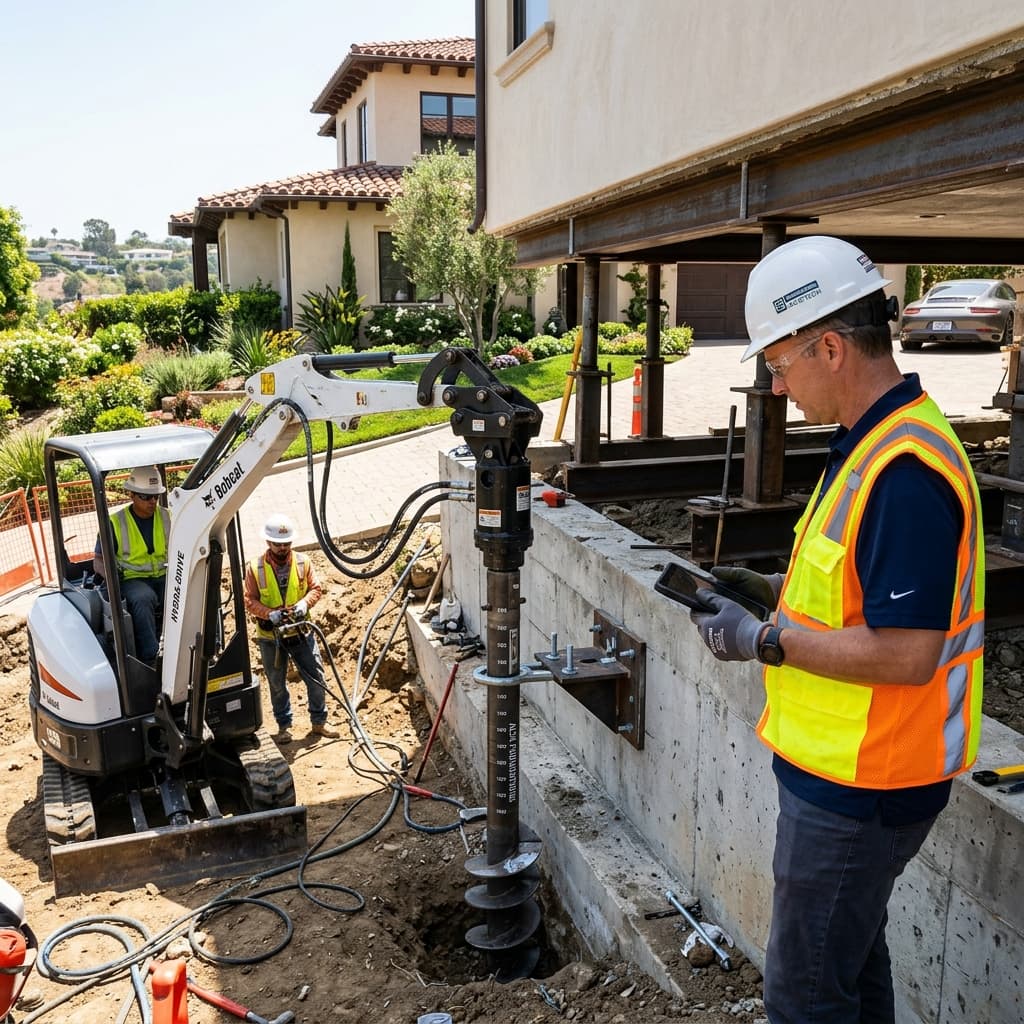
Learn about foundation settlement issues in Torrance's post-war residential tracts. Discover slab-lifting methods and how to address floor sloping.
Torrance features extensive residential tract housing built during the post-war boom of the 1950s and 1960s. These homes are constructed primarily on concrete slab-on-grade foundations. Over the decades, localized soil consolidation and clay shrinkage have caused many of these slabs to settle, leading to sloped floors and drywall cracks.
At PiersPro (CA GC License #1110475), we specialize in concrete slab lifting and foundation repair across Torrance. This guide explains how to identify and repair slab settlement in Torrance properties.
Slab Settlement in Post-War Tract Homes
Post-war concrete slabs were typically poured without thick steel reinforcement. As clay soils shrink during dry Southern California summers:
* The soil pulls away from the concrete slab, leaving voids.
* The slab settles into these voids, causing cracks in vinyl, hardwood, or tile floor coverings.
* Interior drywall cracks form near the center of the home.
To lift these slabs back to level without demolition, we utilize polyurethane slabjacking or steel helical piers.
---
Mid-Content Call to Action
Are you experiencing sloping floors or slab cracks in Torrance?
Schedule an honest evaluation. PiersPro offers a detailed $99 Instrumental Diagnostic (credited to your contract) featuring digital level surveys.
Schedule a Torrance Inspection or call (213) 583-6669 to speak with our South Bay team.
---
Frequently Asked Questions (FAQ)
Q1: How long does slab lifting take in Torrance?
A1: Most polyurethane slabjacking projects can be completed in half a day to one full day. The foam cures immediately, allowing you to use your floors the same day.
Q2: Are permits required for slab repair in Torrance?
A2: Yes. The City of Torrance Community Development Department requires permits for structural foundation stabilization to ensure safety and code compliance.