
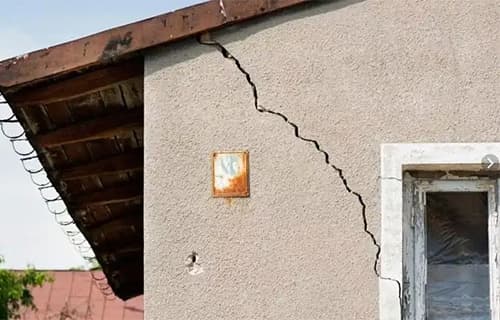
How to tell harmless slab cracks from structural settlement in Los Angeles homes, what causes movement, and which repair options fit each case.
Table of Contents
A slab foundation can crack for harmless reasons or for structural ones, and the only reliable way to tell them apart is to look at how the crack behaves, not just how wide it is. Thin, straight hairline cracks are usually shrinkage and are monitored, not repaired. Cracks that grow, show one side higher than the other, or appear together with sticking doors, sloping floors or gaps at the walls point to settlement or soil movement and need an on-site assessment. In Los Angeles the usual causes are expansive clay, poorly compacted fill, leaking pipes and water collecting along the foundation. Repair options for slab foundation repair in Los Angeles range from sealing and drainage correction to slab piers that carry the slab to stable soil. The method is chosen only after an inspection, never from a photo.
What a Slab-on-Grade Foundation Is, and Why It Moves
A slab-on-grade house sits on a concrete slab poured directly on prepared soil, with thickened edges (footings) around the perimeter and under bearing walls. There is no crawl space, so there is nothing between the concrete and the ground. That makes slab homes simple and solid, but it also means any change in the soil under the slab shows up in the floor above it.
Soil under Southern California homes changes for a few common reasons:
- Expansive clay swells when wet and shrinks when dry, lifting and dropping parts of the slab unevenly.
- Fill soil placed during grading can compress over time, especially on lots that were cut and filled on a slope.
- Water from leaks or poor drainage softens the soil under one area of the slab while the rest stays firm.
- Tree roots pull moisture from the soil and can dry out the ground near the foundation.
Hairline Cracks vs Structural Cracks
Almost every slab has some cracks. Concrete shrinks as it cures, and thin cracks are an expected result. The point of an inspection is to separate those from cracks that show movement.
| What you see | Usually means | Typical next step |
|---|---|---|
| Thin, straight hairline crack, no height difference | Curing shrinkage | Monitor and seal if needed |
| Crack with one side higher than the other | Differential settlement or heave | On-site assessment |
| Crack that keeps lengthening or widening | Active movement | On-site assessment, possibly an engineer |
| Cracks plus sticking doors, drywall cracks above openings | Movement affecting the framing | On-site assessment |
| Damp or cold spot on the floor, sound of running water | Possible slab or pipe leak | Leak detection by a licensed plumber |
A simple way to track a crack is to mark each end with a pencil, date it, and photograph it next to a ruler every few weeks. A crack that stays put through a full rainy season is a very different problem from one that moves.
Not sure what you are dealing with? Schedule an on-site inspection or call (213) 583-6669. The inspection is free when you then hire PiersPro for foundation repair: its cost is credited in full toward the repair.
Causes Worth Ruling Out Before Any Repair
Repairing the concrete without finding the cause usually means the problem returns. Before a repair method is chosen, these are checked:
- Plumbing leaks under the slab. A leak can wash out or soften soil beneath one area. Leak detection and pipe repair are done by a licensed plumber, and they come first.
- Surface drainage. Downspouts that empty next to the house, planters that slope toward the wall and missing gutters send water to the same spot every storm. Our drainage systems page explains the usual fixes.
- Soil conditions. Expansive clay and fill are identified from the property history, the pattern of movement and, where needed, an engineer's evaluation.
- Moisture at the slab edge. Persistent dampness along the perimeter is addressed through foundation waterproofing and drainage rather than by patching concrete.
Slab Foundation Repair Options and When Each Fits
There is no single fix for a slab. The right option depends on whether the slab is still moving, how far it has moved and what is under it.
| Option | What it does | When it generally fits |
|---|---|---|
| Crack sealing or epoxy injection | Fills and bonds the crack | Stable cracks with no height difference |
| Drainage correction | Moves water away from the foundation | When water is the cause of movement |
| Slab piers | Transfers load to deeper, more stable soil and can lift the slab back toward level | Settlement that continues or has caused damage |
| Plumbing repair | Stops the leak that is eroding soil | Leak confirmed under the slab |
| Floor-level monitoring | Tracks movement over time | Minor, uncertain movement |
Slab piers are installed through or at the edge of the slab down to soil that can carry the load. They are used when the soil under the slab is not holding it up, which is a structural problem and not a cosmetic one. Our foundation repair page describes how piers are used on Southern California homes.
Whichever method fits, the repair method is chosen after an inspection by a qualified contractor or an engineer, and the scope should be written down before work starts.
Permits, Engineers and Hiring
Structural work on a foundation can require engineered plans and a permit, depending on the scope and the city. Rules differ between the City of Los Angeles and other cities in the county, so check with LADBS or the building department of your own city before work begins. When you compare contractors, verify the license on the CSLB website, ask for a written scope and ask who will be responsible for permits.
What Affects the Cost of Slab Repair
Cost depends on the repair method, the number of piers or the length of crack work, access to the slab, whether finished floors must be removed and replaced, the plumbing or drainage work needed, and engineering and permit requirements. Because every slab is different, a reliable price comes only after an on-site look. If you live in the city itself, see how we work on the Los Angeles page, then book an inspection so the cracks can be measured and the likely cause identified.
Frequently Asked Questions
Q1: Are all cracks in a concrete slab a sign of foundation failure?
A1: No. Thin, straight hairline cracks are common as concrete cures and shrinks. Cracks that grow, show a height difference between sides, or appear with sticking doors and sloping floors suggest movement and should be inspected.
Q2: What causes slab foundations to settle in Los Angeles?
A2: Common causes are expansive clay that swells and shrinks with moisture, compressible fill soil, leaking pipes under the slab and water collecting near the foundation. An inspection identifies which of these applies to a specific lot.
Q3: Can a slab be repaired without lifting the whole house?
A3: It depends on the cause and the amount of movement. Stable cracks may only need sealing, while continuing settlement may need slab piers. The method is chosen after an assessment, not before.
Q4: Do I need a permit for slab foundation repair?
A4: Structural repairs can require engineered plans and a permit, depending on scope and city. Confirm the requirements with LADBS or your city building department before work starts.
Permit rules, fees, codes and deadlines vary by city and county and change over time. Please confirm the details with the building department of your city or county before starting work.
About the author: This article was prepared by the PiersPro team. PiersPro is a d/b/a of SKILL SEE SERVICES INC, a California licensed contractor (Class B, CSLB #1110475). Verify the license on the CSLB website.