
Is your Southern California home showing signs of wood damage? Discover 2026's advanced structural wood repair techniques, dry rot solutions, and code compliance for lasting home integrity.
Table of Contents
Is your Southern California home giving you subtle hints of trouble? Perhaps a slight sag in a floor, a persistent creak, or a faint, musty odor lingering in the air? These seemingly minor issues can often be the early indicators of significant structural wood damage – a problem that, if left unaddressed, can severely compromise your home's safety, stability, and long-term value.
As Dmitrii, owner and lead structural engineer at PiersPro, I've seen firsthand the critical importance of timely and expertly executed structural wood repair for homeowners across Los Angeles and Orange County. At PiersPro, we don't just patch problems; we provide permanent, engineered solutions that bring peace of mind and restore your home's integrity, leveraging the latest advancements and adhering to the most current building codes for 2026 and beyond.
Unveiling Hidden Threats: Advanced Diagnostics & Code Compliance in 2026
The unique climate of Southern California, with its combination of dry spells and occasional heavy rains, unfortunately creates fertile ground for wood degradation. Dry rot, despite its misleading name, requires moisture to thrive and is a prevalent culprit, often flourishing unseen in poorly ventilated crawl spaces. Termites also pose a pervasive threat, silently hollowing out crucial structural elements. Water damage, whether from leaky pipes, improper drainage, or roof issues, weakens wood fibers and invites both rot and pests.
In 2026, a truly authoritative approach to structural wood repair in Southern California relies on more than just visual checks. At PiersPro, we utilize state-of-the-art non-invasive tools, including advanced moisture meters and thermal imaging cameras, to pinpoint areas of excessive moisture even behind finished surfaces. These technologies allow us to accurately diagnose the precise extent of damage, enabling us to intervene before minor dry rot escalates into extensive structural damage requiring complex beam replacement or widespread floor joist repair.
Crucially, all structural alterations in Southern California, including replacing or sistering damaged floor joists or girders, generally require permits. A significant change homeowners need to be aware of is the 2025 California Building Standards Code (Title 24), which became mandatory on January 1, 2026. This comprehensive update includes heightened structural design requirements and an increased focus on resilience. Any project submitted on or after this date must comply with these new, more stringent standards. Our expertise ensures every repair is not just effective, but also compliant with rigorous local regulations, including those from the Los Angeles Department of Building and Safety (LADBS).
Engineering the Future of Wood Repair: Modern Techniques & Materials
When structural wood is compromised, a strategic, engineered approach is paramount. Modern solutions integrate advanced materials and precision techniques to ensure lasting safety and stability:
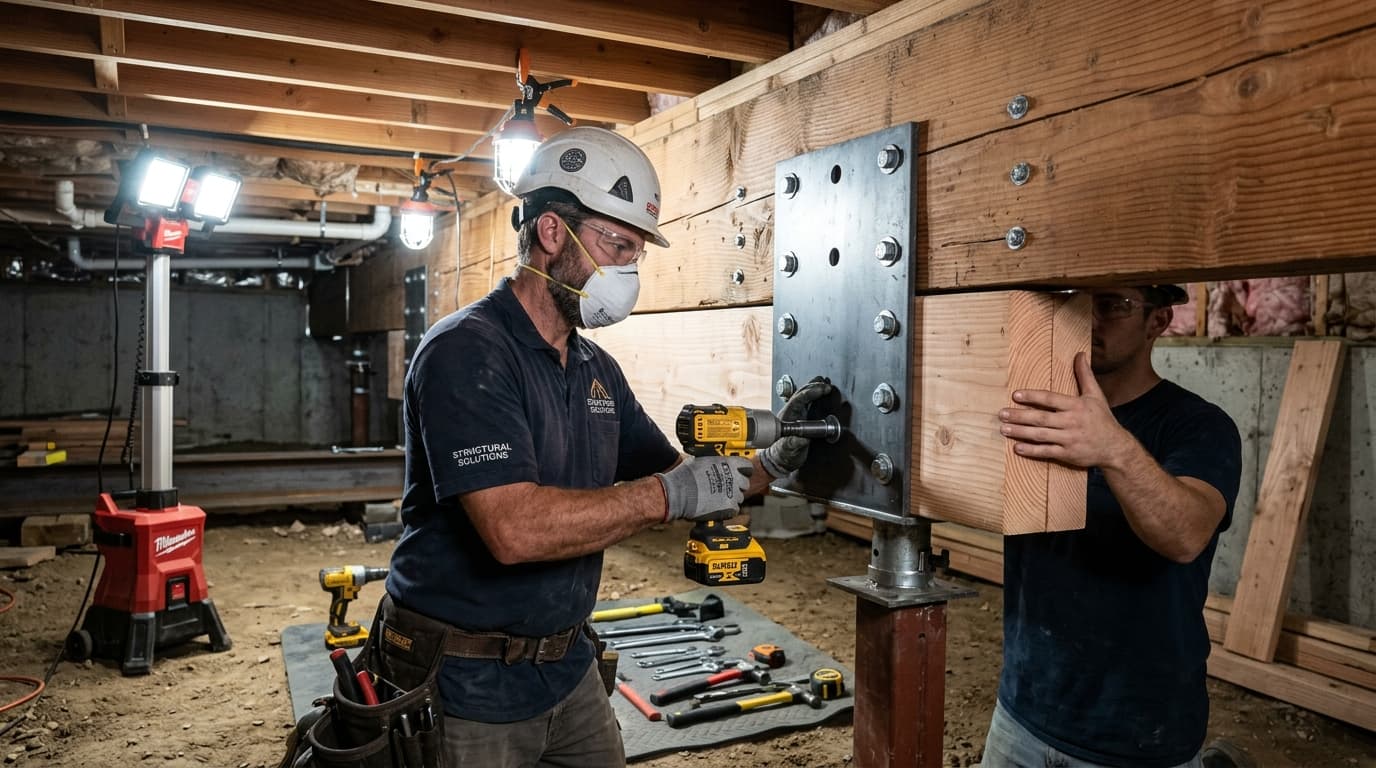
* Beam Replacement: For beams severely compromised by extensive dry rot, water damage, or if they were originally undersized for their load, a full replacement is often the safest and most durable solution, especially given Southern California's seismic activity. This is a major structural undertaking that requires temporary shoring and expert engineering to ensure the load-bearing capacity is fully restored.
* Sistering Floor Joists: Sagging or bouncy floors are a common indicator of weakened floor joists. 'Sistering' involves attaching a new, robust joist alongside the compromised one to reinforce the structure. However, improper sistering can lock in the sag. Our best practice involves first using telescoping support jacks to carefully lift the original joist back to a level position *before* installing the sister joist. The sister joist itself should ideally match the wood type and size of the existing joist and span its full length. We employ cutting-edge fasteners, such as carriage bolts with washers and nuts, or structural screws/nails applied in a staggered pattern, to create a strong, reliable bond. Furthermore, we strictly adhere to LADBS guidelines (P/BC 2026-007) for cutting, notching, and boring of wood framing members to maintain their structural integrity.
* Advanced Materials for 2026: For critical beams and joists, we frequently employ high-strength engineered wood products like Laminated Veneer Lumber (LVL) or Glued Laminated Timber (Glulam). These offer superior strength-to-weight ratios and enhanced dimensional stability compared to traditional lumber. For joist sistering, we often utilize new generation pressure-treated lumber that incorporates micronized copper azole (MCA), providing robust, long-lasting protection against rot and insects, a key innovation for 2025 durability standards. For foundation plates or sills in contact with the earth, we ensure preservative-treated wood (AWPA U1) is used, with field-cut ends also properly field-treated (AWPA M4), and suitable galvanized or stainless steel fasteners.
Key Considerations for Structural Wood Repair
When evaluating structural wood repair for your Southern California home, here are vital points:
* Safety First: Compromised structural wood directly impacts your home's integrity and safety. Professional assessment ensures accurate diagnosis and safe, code-compliant repairs.
* Permanent Solutions: Addressing the root cause of moisture or damage is essential to prevent recurrence. This often involves integrating comprehensive moisture control strategies, including proper ventilation and drainage systems.
* Cost-Effectiveness: While professional structural repair is an investment, it's significantly more cost-effective than allowing damage to spread, potentially leading to much more extensive and expensive foundation repair down the line.
* Expertise Matters: Our team, operating under California General Contractor License #1110475, combines structural engineering principles with general contracting expertise to deliver comprehensive, lasting solutions.
Common Homeowner Questions About Structural Wood Repair
Q: How can I tell if I have dry rot or termite damage?
A: Signs include spongy or crumbling wood, visible fungal growth, a musty smell, sagging floors, or pinpoint holes and wood dust for termites. Our advanced diagnostic tools can pinpoint damage often invisible to the naked eye.
Q: Is it always necessary to replace a damaged beam or joist, or can it be repaired?
A: The decision depends on the extent of the damage and the structural role. Minor, localized damage might be repairable. However, for severe dry rot or extensive water damage, or if the original member was undersized, a full replacement with an engineered solution is typically the safest and most durable option.
Q: Are permits required for structural wood repair in Southern California?
A: Yes, generally. Most structural alterations, including significant dry rot repair, beam replacement, or sistering joists, require permits from your local building department, such as LADBS. Projects submitted since January 1, 2026, must adhere to the updated 2025 California Building Standards Code.
Secure Your Home's Future with PiersPro
Don't let structural wood issues compromise the safety and value of your Southern California home. From the early warning signs of a bouncy floor to visible dry rot and compromised beams, PiersPro offers expert, permanent solutions grounded in the latest engineering principles and building codes. As Dmitrii, I lead a team committed to delivering exceptional quality and peace of mind.
Our expertise extends beyond simple repairs; we provide comprehensive Structural Wood Repair services, ensuring your entire home's stability. If you suspect dry rot, damaged beams, or compromised floor joists, act now. Contact Dmitrii and the PiersPro team for a professional assessment. Call us at (213) 583-6669 or book your free inspection today to protect your Southern California property for years to come.