
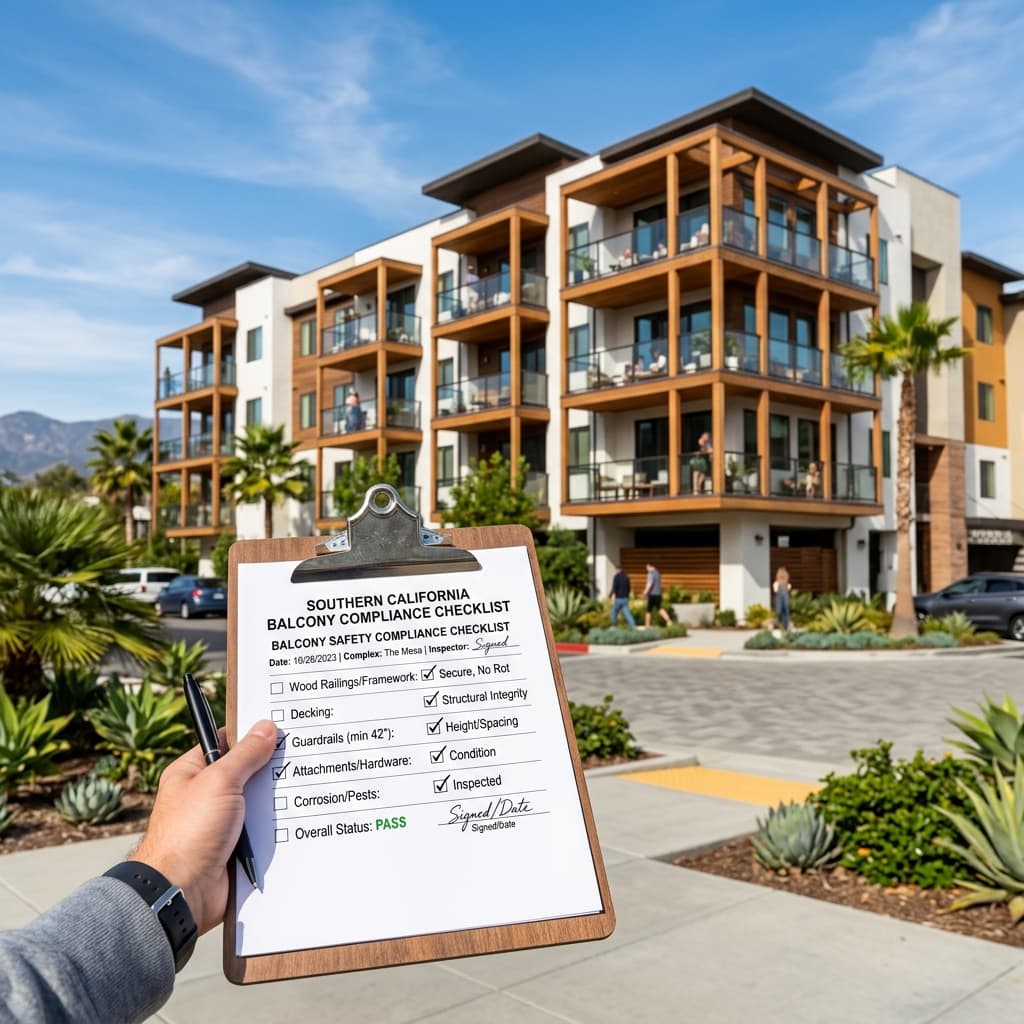
A practical guide for HOA board members and condominium associations navigating California Civil Code §5551 (SB-326): 95% statistical sampling, engineer requirements, reserve studies, and turnkey repair management.
Table of Contents
- 1. What Buildings Fall Under SB-326?
- 2. Key Differences: SB-326 vs. SB-721
- 3. The 95% Statistical Confidence Standard
- 4. Who Can Perform an SB-326 Inspection?
- 5. Integrating SB-326 with HOA Reserve Studies
- 6. How HOA Boards Should Prepare in 2026
- 7. California Regulatory & Professional Scope Disclosure
- Request an HOA Balcony Compliance Proposal
For Homeowners Association (HOA) board members, community managers, and condominium associations across California, navigating exterior building safety is among the most critical fiduciary duties of the decade. Codified under California Civil Code §5551 (part of the Davis-Stirling Common Interest Development Act), Senate Bill 326 (SB-326) mandates periodic visual and structural evaluations of exterior elevated elements (EEEs).
While SB-721 applies to rental apartments, SB-326 applies specifically to condominiums and HOA common-interest developments. Because common-area balconies involve shared property ownership and board fiduciary liability, the standards for SB-326 are distinctly more stringent.
In this guide, PiersPro explains the key requirements of Civil Code §5551, the 95% statistical sampling standard, reserve study coordination, and how our turnkey contractor model simplifies the entire process for HOA boards.
---
1. What Buildings Fall Under SB-326?
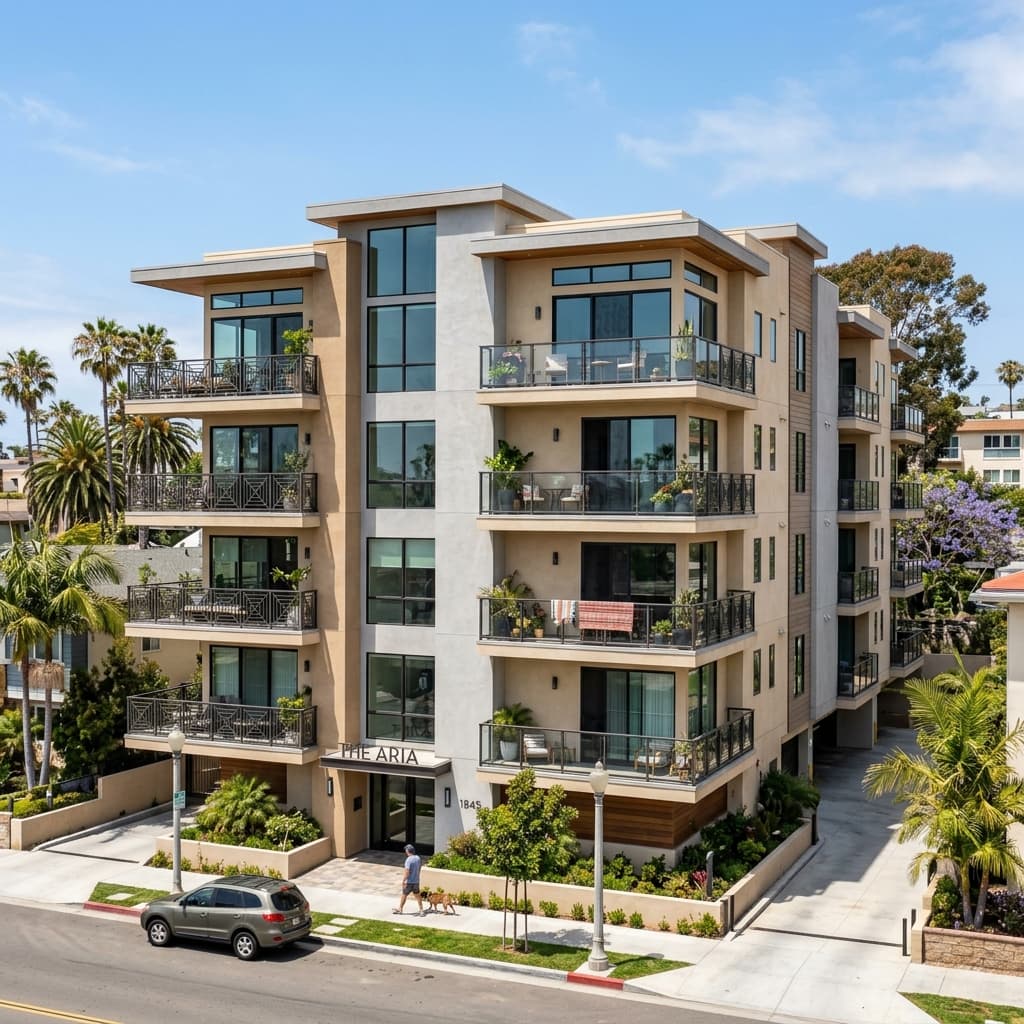
Senate Bill 326 applies to common interest developments (CIDs)—including condominiums, townhome communities, and planned developments—containing three or more residential units.
The statute covers all exterior elevated elements (balconies, decks, elevated walkways, stairways, and railings) that:
* Extend beyond exterior building walls.
* Sit more than six feet above ground level.
* Rely on load-bearing wood or wood-based framing.
* Are defined as common areas or exclusive-use common areas maintained by the association.
---
2. Key Differences: SB-326 vs. SB-721
| Compliance Metric | SB-326 (Civil Code §5551) | SB-721 (Health & Safety Code §17973) |
|---|---|---|
| Target Property | Condominiums & HOAs (Common Interest) | Multifamily Apartment Buildings (Rentals) |
| Responsible Party | HOA Board of Directors | Property Owner / Landlord |
| Inspection Frequency | Every 9 years (aligned with reserve study) | Every 6 years |
| Sample Size Required | Random sample for 95% statistical confidence | At least 15% of each element type |
| Inspector Credentials | Licensed Structural or Civil Engineer, or Architect only | Licensed GC (5+ yrs exp), Engineer, or Architect |
| Initial Deadline | January 1, 2025 | January 1, 2025 |
---
3. The 95% Statistical Confidence Standard
Unlike the simple 15% sample size under SB-721, SB-326 requires an inspector to generate a mathematically sound random sample of elements sufficient to deliver a 95% confidence level with a margin of error of no more than plus or minus 5%.
For an HOA community with 50 balconies, a 95% confidence standard may require inspecting 40 or more individual balconies. For an association with 200 balconies, the statistical sample might represent 70 to 80 units. Inspecting fewer than the statistically calculated number leaves the association out of compliance and exposes board members to personal liability.
---
4. Who Can Perform an SB-326 Inspection?
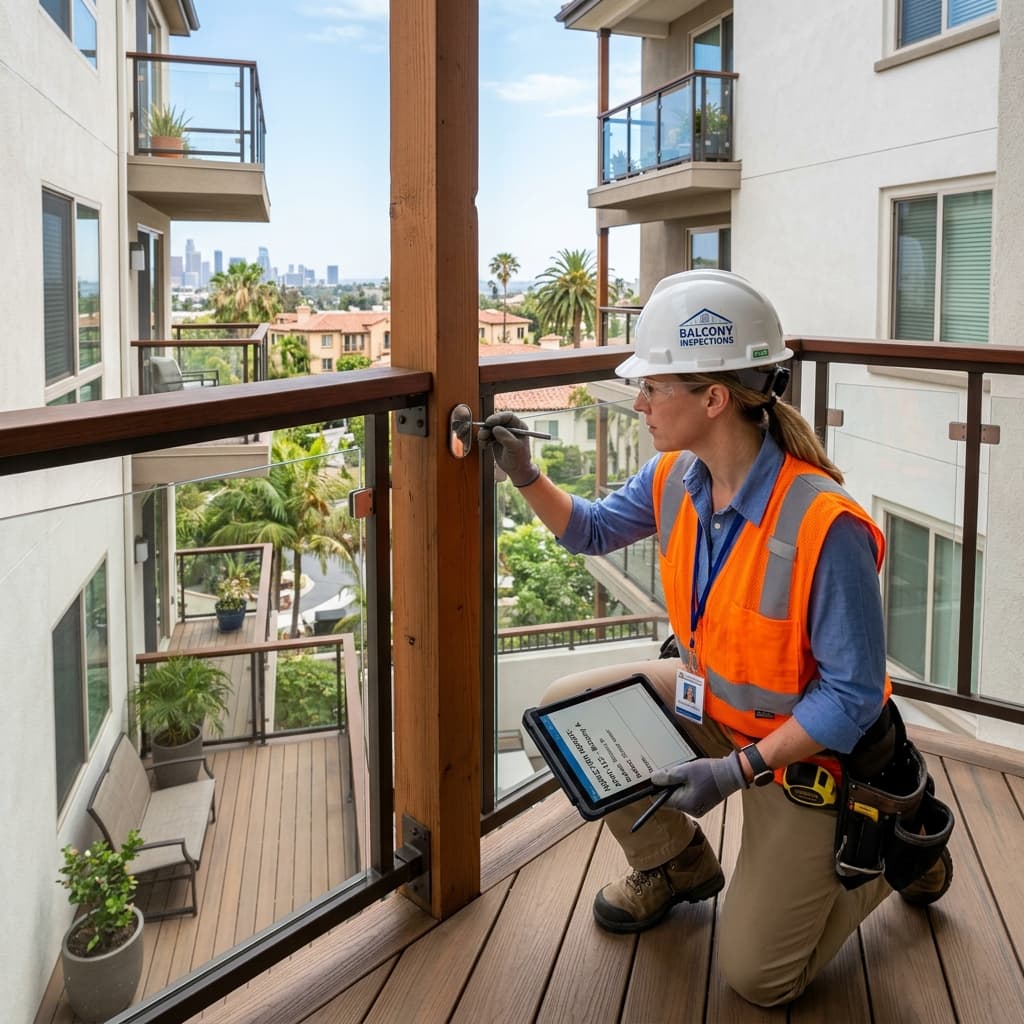
California Civil Code §5551 is clear and unambiguous: only licensed structural engineers, civil engineers, or licensed architects may conduct an SB-326 inspection and sign the final compliance document. General contractors, handymen, and home inspectors are legally prohibited from certifying an SB-326 report.
The HOA Dilemma: Coordinating Multiple Vendors
Traditionally, an HOA board has had to independently find, interview, and contract an engineering firm to conduct the evaluation, and then separately solicit bids from general contractors to perform destructive openings, patch stucco, and execute any needed structural repairs. This disjointed process often results in finger-pointing, budget overruns, and administrative delays.
The PiersPro Turnkey Solution for HOAs
At PiersPro, we eliminate the complexity:
* We Coordinate the Licensed Engineer: When you work with PiersPro, we provide and coordinate a licensed professional engineer or architect for your association's inspection. The HOA board does not need to search for or manage outside engineering firms.
* We Perform Minimally Invasive Access: Our experienced crews handle the opening of inspection ports, borescope insertion, and clean cosmetic closing of stucco soffits on the same day.
* We Execute All Repairs Under One Roof: When the inspecting engineer's report identifies structural framing decay or waterproofing failure, PiersPro provides clear, transparent repair bids and executes the work with closed city building permits.
---
5. Integrating SB-326 with HOA Reserve Studies
Under Civil Code §5551, the final inspection report must be delivered to the HOA board and incorporated into the association's reserve study:
- Anticipated Service Life: The report provides an estimated remaining useful life for the load-bearing elements and waterproofing membranes.
- Reserve Funding Calculations: The board must use these findings to establish reserve funding levels, preventing sudden, massive special assessments that disrupt homeowner finances.
- Legal Disclosure in Escrow: When condo owners sell their units, the SB-326 report and reserve study disclosures must be provided to prospective buyers and lenders during escrow.
---
6. How HOA Boards Should Prepare in 2026
If your condominium association has not yet completed its SB-326 evaluation, take immediate action to protect board members and homeowners:
- Inventory All Elevated Elements: Review the CC&Rs and architectural plans to identify all exterior elevated walkways, balconies, stairwells, and landings that rely on wood supports.
- Determine Common-Area vs. Exclusive-Use Responsibilities: In most condominiums, structural framing is an association common-area obligation, while superficial decorative coverings may belong to individual unit owners.
- Notify Homeowners Early: Prepare residents well in advance for inspectors requiring scheduled balcony access and minimally invasive borescope testing.
- Approve a Turnkey Contract: Retain a trusted partner that provides licensed engineering coordination alongside licensed general contracting execution.
---
7. California Regulatory & Professional Scope Disclosure
Official Statutory Notice:
SB-721 inspections are performed under California Health & Safety Code §17973 by a licensed general building contractor with more than five years of relevant experience. SB-326 inspections under California Civil Code §5551 must be performed by a licensed structural engineer, civil engineer, or architect. We do not perform SB-326 inspections directly; we execute the repairs identified in the inspecting professional's report and manage the project on the association's behalf. When you work with PiersPro, we coordinate and provide a licensed engineer for your project, so you do not need to search for one yourself. We do not provide structural engineering services directly. Evaluations of structural capacity, load analysis, and stamped design documents are prepared by a licensed engineer.
---
Request an HOA Balcony Compliance Proposal
Bring your condominium association into full California compliance with confidence. Contact PiersPro today to discuss your property's inventory and receive a comprehensive SB-326 proposal.
Call (213) 583-6669 or Request an HOA Proposal online.