Diagnostic Guide

Is a Channel Drain Right for Your Home?

The order matters. Identify your symptoms, verify property fit, and explore tailored drainage alternatives.

Signs the system is needed⚠️ Warning Signs

Signs You Need It

  • Water running toward the garage door
  • Water reaching a patio door threshold
  • Sheet flow crossing a driveway or pool deck
  • Water stains or erosion at the base of a garage door or door threshold
  • A patio or pool deck that stays wet long after rain
  • Debris and silt carried across a driveway after storms
Where the system fits✔ Perfect Match

Where It Fits

  • Garage entries and walk-in doors
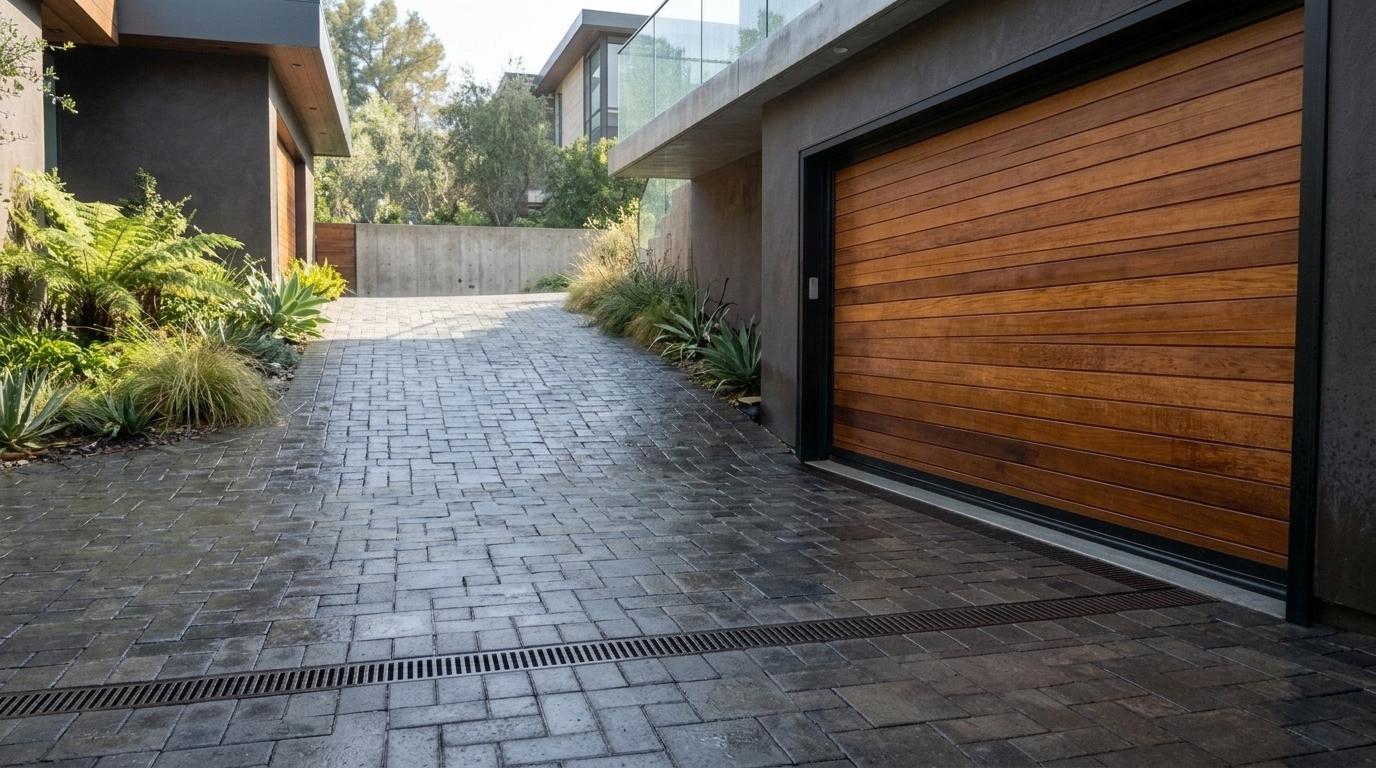
  • Driveways that slope toward the house
  • Patios and pool decks
  • Entries below the level of the street or driveway
  • Outdoor living areas with solid paving and no room for a yard drain
  • Retrofit jobs where a drain must be cut into existing concrete
Alternatives

Where It Does Not Fit

Groundwater under the lawn · Roof runoff alone (a downspout line is more direct)

💧 Groundwater Issue?

Roof and surface pipes do not lower a high water table. An in-ground gravel filter does.

Explore French Drains ➔
🌧️ Roof Runoff Alone?

Roof water is caught directly at downspouts in smooth solid pipe, not run across paving.

Explore Downspout Drains ➔

How we build it

The order matters. Each step sets up the next one.

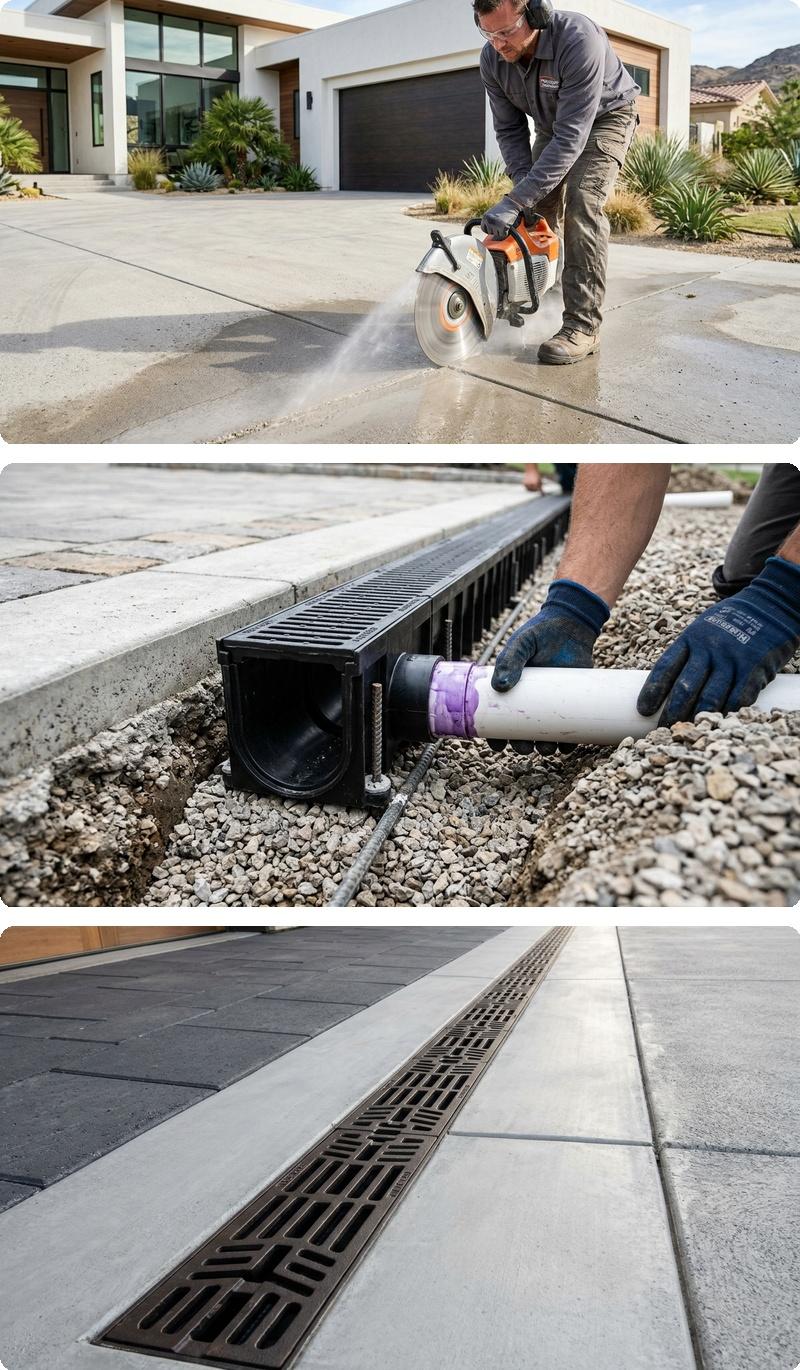
  1. Choose the load classFoot traffic, cars or heavy vehicles each need a different grate and channel.
  2. Cut the slabWe saw-cut a clean line across the concrete to the width of the channel.
  3. Set at the right elevationThe channel sits slightly below the paving so water drops in.
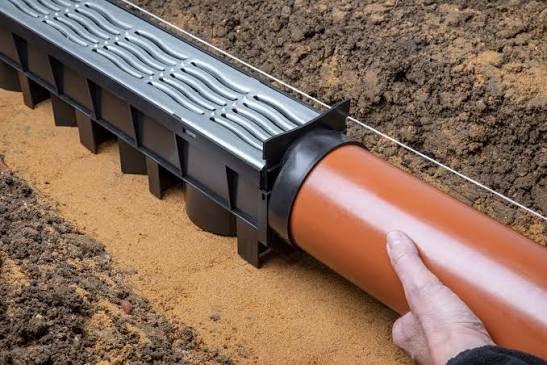
  4. Connect to solid pipeThe outlet joins a smooth solid line, never a perforated one.
  5. Pour and finishConcrete is placed around the channel and finished flush with the grate.
Three stages of a channel drain installation: saw-cutting the concrete slab, setting the channel at elevation with solid pipe connection, and pouring concrete flush with the grate

What goes wrong when it is done badly

Channel with no outlet
It fills and overflows. Every channel needs a drain-away route.
Wrong load class
Pedestrian grates crack under vehicles.
Left uncleaned
Leaves and grit block the slots. The grate lifts out for cleaning.
Not matching the slope
A channel only works if the paving slopes toward it. We check the slope before cutting.
Shallow channel at a wide opening
A narrow channel at a wide door can overflow in a heavy storm. We size it to the area it serves.

What it costs

Price depends on channel length, grate class, concrete cutting and the route to the outlet. The estimate lists each item. The on-site inspection starts at $99 and is credited toward repair.

Questions about Channel drain

Channel drain or French drain?

A channel drain catches water on the surface. A French drain collects water from the soil. Many yards need both, with the pipes kept separate.

Will it work with a driveway that slopes toward the garage?

Yes, that is one of its most common uses. We place it across the flow just before the door.

How wide should a channel drain be?

It depends on the area draining to it and the opening it protects. We size the channel and outlet for your site on the on-site visit.

Can a channel drain be installed in existing concrete?

Yes. We saw-cut the slab along the line, set the channel, connect the outlet and patch the concrete flush with the grate.

Where does the channel drain discharge?

Through a solid pipe to a safe discharge point, such as a dry well, a catch basin, the street where allowed, or a storm drain connection. Rules vary by city, so check your own city's website.

How much does channel drain installation cost?

It depends on channel length, grate class, concrete cutting and the route to the outlet. Every project is priced individually. The on-site inspection and estimate is $99, credited toward the work if you hire PiersPro.

Which areas do you serve?

We install channel drains in Los Angeles County and Orange County, within about 40 miles of Whittier.

Do I need a permit?

Often not for a small yard system, but it depends on the city and where the water discharges. Check your own city's website, and we will confirm what applies to your project.

How do I maintain it?

Check the inlets and grates before the rainy season and after big storms, clear leaves and sediment, and watch for water that no longer drains away. If it backs up, call us.

Can a channel drain handle driveway traffic?

Yes, if the grate and channel match the load. Pedestrian grates are for foot traffic; vehicle areas need a heavier class. We choose the class for your use.

Transparent Pricing

Start with an on-site drainage inspection

Good drainage starts with knowing which way your water moves. On every visit we shoot levels across the lot with professional equipment and map the elevations of your site. We use those numbers to design the pipe, its fall and the outlet, then price the job line by line. Led by a California Licensed General B Contractor (Lic #1110475).

  • Level shots across the lot with professional leveling equipment
  • An elevation map of your site, built for our own design calculations
  • Itemized estimate based on measured fall, not guesswork
  • The full $99 is credited toward the work if you hire us

Licensed General Contractor #1110475 (Class B, C-10). Requirements vary by city. Check your city’s building department for local rules.

ANY ON-SITE VISIT
Professional Inspection & Estimate
$99
Full site inspection, level survey and an itemized estimate for your drainage project • credited in full toward the work when you hire us
Calculate by ZIP & Book