
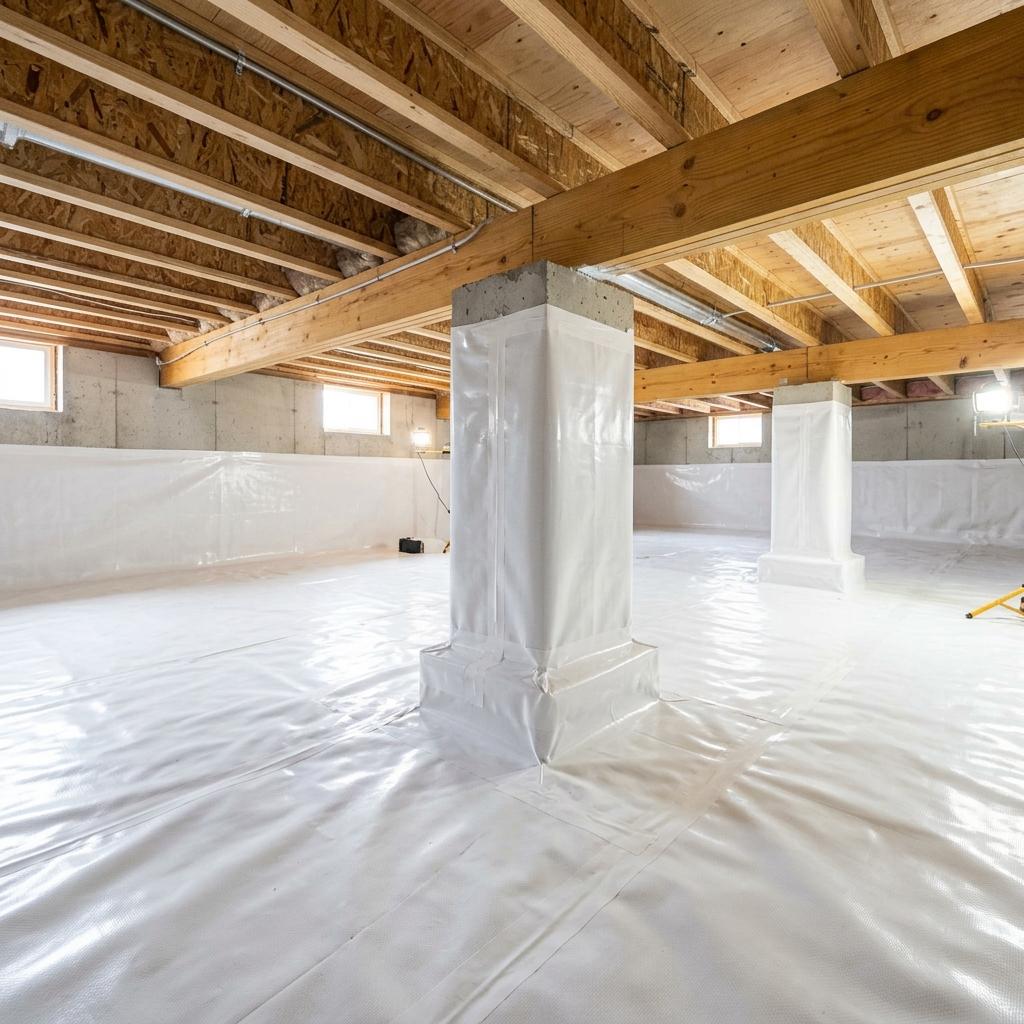
Learn about crawl space moisture issues in older Garden Grove properties. Discover how subfloor encapsulation and joist sistering restore structural safety.
Table of Contents
Garden Grove features a significant number of older residential neighborhoods built in the 1940s and 1950s. Many of these homes feature raised foundations with wood-framed crawl spaces. Because of Garden Grove's clay soils and flat terrain, these subfloor spaces are highly vulnerable to moisture pooling, which leads to structural wood rot and termite damage.
At PiersPro (CA GC License #1110475), we specialize in subfloor diagnostics and structural wood reinforcement across Garden Grove. This guide outlines crawl space repair options.
Crawl Space Moisture and Structural Decay
When water pools in a crawl space due to poor landscape grading or high clay soil water retention:
- Humidity levels rise above 70%, allowing wood-decaying fungi to grow.
- Wooden support posts and girders experience dry rot, losing their compressive strength.
- Floors become sagging or bouncy, and doors begin sticking inside the house.
To restore structural integrity, we install crawl space encapsulation (vapor barriers) and perform wood sistering.
Do you have spongy floors or damp smells in Garden Grove?
Schedule a crawl space check. PiersPro offers a detailed on-site inspection from $99 (credited to your contract) to inspect subfloor wood.
Schedule a Garden Grove Inspection or call (213) 583-6669 to speak with our Orange County team.
How to Tell What Your Crawl Space Needs
Garden Grove sits on flat coastal plain deposits, so water that reaches the house has nowhere to run. The repair depends on where the moisture comes from and how far the damage has gone.
| Symptom | Usual cause | Typical repair |
|---|---|---|
| Musty smell, damp soil, no standing water | Ground moisture evaporating | Vapor barrier, ventilation review |
| Standing water after rain | Yard grading or downspouts | Drainage correction, sometimes a sump pump |
| Soft or crumbling post bases | Wood in contact with wet soil | Replace posts, add concrete pads |
| Sagging floor between supports | Decayed girder or joists | Sistering or replacement |
| Floor slopes toward one wall | Perimeter footing settlement | Foundation evaluation |
The Order of Work
- Stop the water. Grading, downspout extensions and drains come first. New wood in a wet crawl space decays again.
- Repair the structure. Rotted posts, girders and joists are replaced or sistered, and supports are reset on solid pads.
- Control moisture. A sealed vapor barrier goes down last, over a dry, cleaned floor.
Termite activity is often found next to moisture damage. Treatment is done by a licensed pest control company; our part is the structural wood repair that follows. Because the crawl space is already open, it is also the right moment to check whether a post-war house is bolted to its foundation.
Frequently Asked Questions (FAQ)
Q1: What is crawl space encapsulation?
A1: It is the process of sealing the soil floor with a heavy plastic vapor barrier, sealing crawl space vents, and insulating the walls to keep the subfloor clean and dry.
Q2: Can we repair a rotted girder without replacing it?
A2: Yes. If the rot is localized, we install temporary support jacks, cut away the decay, and bolt a new pressure-treated timber alongside the original beam (sistering).
Q3: Do I need to fix drainage before encapsulating a crawl space?
A3: Yes, if water enters after rain. A vapor barrier controls ground moisture, not standing water. Grading, downspouts or a drain are corrected first, then the barrier is installed over a dry floor.
Q4: Is a damp crawl space a structural problem?
A4: Not at first, but it becomes one. Constant moisture decays posts, girders and joists and attracts termites. Caught early, the fix is drainage and a vapor barrier; caught late, it includes wood replacement.
Prices and ranges in this article are approximate and for planning only, and every project is priced individually. The final cost is determined only after an on-site estimate and may differ from the figures shown on this site.
Permit rules, fees, codes and deadlines vary by city and county and change over time. Please confirm the details with the building department of your city or county before starting work.
About the author: This article was prepared by the PiersPro team. PiersPro is a d/b/a of SKILL SEE SERVICES INC, a California licensed contractor (Class B, CSLB #1110475). Verify the license on the CSLB website.