
Helical piers or push piers? How each works, what each costs, and which suits a hillside home in Hacienda Heights.
Table of Contents
Both systems do the same essential job: transfer the structural weight of a settling foundation past weak surface soils down to deeper, load-bearing soil. However, they install differently, and that mechanical difference decides which one suits your Hacienda Heights home.
How they are installed
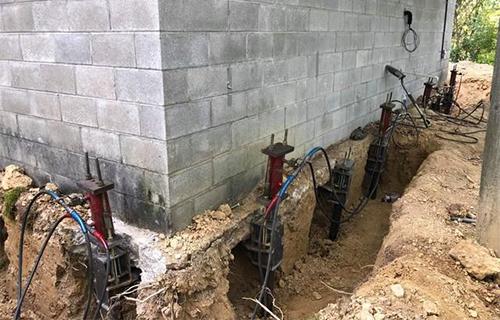
- Push piers (Resistance piers): Straight hollow steel pipe sections driven vertically into the earth using hydraulic rams. The reaction force is the physical weight of the house itself.
- Helical piers: High-strength solid or tubular steel shafts with helical screw plates welded to the tip. They are mechanically screwed into the soil using a hydraulic torque motor, independent of the home's weight.
Comparison: Helical vs Push Piers
| Feature | Helical Piers | Push Piers |
|---|---|---|
| Light single-story homes | Excellent fit | Often too light to drive against |
| Heavy two-story homes | Works great | Excellent fit |
| Additions, decks & retaining walls | Works (no structure needed) | Not suitable |
| Capacity verification | Torque monitored during install | Pressure gauge during drive |
| Typical cost per pier | $1,800–$2,500 | Priced after inspection |
Why helical piers dominate on hillside lots
Many Hacienda Heights properties are single-story ranch homes on sloped hillside pads. They are often too light to provide the resistance needed for push piers to reach deep competent soil without lifting the house prematurely. Furthermore, helical piers use compact mini-excavator attachments that easily navigate steep, terraced side yards.
The honest contractor answer
Soil density, bedrock depth, and structural dead weight decide the system—not a franchise's sales quota. PiersPro installs both systems and recommends whichever the engineering calculations dictate.
What the Soil Decides
Hacienda Heights lies against the Puente Hills. Homes range from hillside lots to flatter streets near the valley, mostly built from the 1950s on. The two settings point to different answers:
- Hillside pads: part cut, part fill. The fill side settles, the house is light, and access is tight. Helical piers suit all three conditions.
- Flatter streets: deeper alluvial soil and easier access. Either system can work; the weight of the structure decides.
Three Questions That Settle It
- How heavy is the structure at that wall? A push pier needs the building's weight to drive against.
- How deep is firm soil? Both systems go deeper by adding sections; helical capacity is confirmed by torque as it goes in.
- Is there a structure at all? New decks, additions and walls have nothing to push against, so they get helical piers.
Whichever system is used, the count and locations should come from an elevation survey, and the work should be covered by engineered plans and a permit.
Need an honest assessment? Schedule a foundation inspection to get measured elevation data.
Frequently Asked Questions
Q1: Are helical piers better than push piers?
A1: Neither is better in general. Helical piers suit light structures, new construction and tight access. Push piers suit heavier buildings. Soil and load decide.
Q2: Why can a light house not use push piers?
A2: A push pier is driven using the weight of the house as resistance. A light single-story home may start to lift before the pier reaches firm soil.
Q3: Do both pier types need a permit?
A3: Structural underpinning generally requires engineered plans and a building permit. Hacienda Heights is unincorporated, so permits go through Los Angeles County.
Prices and ranges in this article are approximate and for planning only, and every project is priced individually. The final cost is determined only after an on-site estimate and may differ from the figures shown on this site.
Permit rules, fees, codes and deadlines vary by city and county and change over time. Please confirm the details with the building department of your city or county before starting work.
About the author: This article was prepared by the PiersPro team. PiersPro is a d/b/a of SKILL SEE SERVICES INC, a California licensed contractor (Class B, CSLB #1110475). Verify the license on the CSLB website.