
Compare the top drainage systems used to protect home foundations from water pooling. Learn about sub-surface French drains and surface channel drains.
Table of Contents
Water is the primary enemy of home foundations. Saturated soils expand, putting pressure on footings, while dry soil shrinkage causes foundation settlement. To protect your home's structural stability, you must keep water away from the foundation footing using professional drainage systems.
Two of the most common drainage solutions are French drains and channel drains.
At PiersPro (CA GC License #1110475), we install custom residential drainage systems. In this guide, we compare French drains vs. channel drains to help you select the right system.
1. French Drains (Sub-Surface Water Control)
A French drain is a trench dug around the foundation, lined with filter fabric, filled with gravel, and fitted with a perforated pipe at the bottom.
- How it works: It intercepts rising sub-surface groundwater or pooling surface water before it reaches the concrete footing, directing it away from the home.
- Best for: Crawl spaces that collect water, expansive clay soils, and slope runoff.
2. Channel Drains (Surface Water Interception)
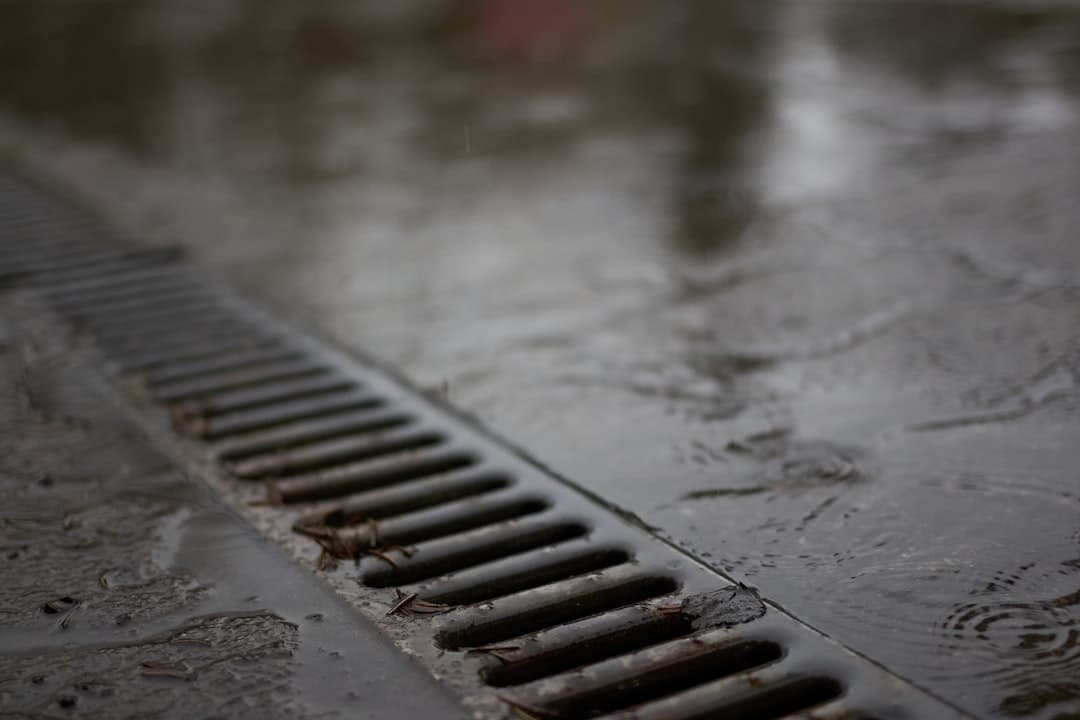
A channel drain (or trench drain) is a linear plastic or metal trough installed flush with a concrete surface, covered by a removable grate.
- How it works: It collects surface runoff from driveways, patios, and pool decks, directing the water into downspouts or storm drains.
- Best for: Preventing surface flooding near garage doors, patios, and walkways.
Does water pool near your home's foundation when it rains?
Protect your home from water damage. PiersPro designs and installs custom drainage systems. Schedule our on-site inspection from $99 (credited to your contract).
Book a Drainage Inspection or call (213) 583-6669 to speak with our drainage experts.
Side by Side
| French drain | Channel drain | |
|---|---|---|
| Collects | Water in the soil | Water on a paved surface |
| Pipe | Perforated, in gravel and fabric | Solid, from the channel outlet |
| Typical place | Along footings, behind walls, base of slopes | Driveways, patios, thresholds |
| Sign you need it | Soggy soil, damp crawl space | Sheet of water running toward the house |
The Rule That Keeps Both Working
Surface water and groundwater travel in separate pipes. Channel drains and downspouts connect to solid pipe. Only the French drain uses perforated pipe. Connecting roof or surface water into a perforated line puts that water into the soil at the foundation.
Many Homes Need Both
A hillside or clay lot often has water arriving two ways: across the paving and through the ground. The two systems can share a trench and an outlet, as long as the pipes stay separate until the discharge point. Where there is no gravity outlet, a sump pump lifts the water out.
Frequently Asked Questions (FAQ)
Q1: What is the typical cost of a French drain installation?
A1: Residential French drain installation typically runs from $25 to $38 per linear foot, depending on depth, excavation difficulty, and hardscape cutting requirements.
Q2: Do I need a permit to install a drainage system?
A2: In most Southern California cities, basic backyard drainage corrections do not require building permits. However, connecting your system to a public street or storm drain requires a public works permit.
Q3: Can a French drain and a channel drain share one pipe?
A3: No. They can share a trench, but surface water goes in solid pipe and groundwater in perforated pipe, joined only at the outlet.
Prices and ranges in this article are approximate and for planning only, and every project is priced individually. The final cost is determined only after an on-site estimate and may differ from the figures shown on this site.
Permit rules, fees, codes and deadlines vary by city and county and change over time. Please confirm the details with the building department of your city or county before starting work.
About the author: This article was prepared by the PiersPro team. PiersPro is a d/b/a of SKILL SEE SERVICES INC, a California licensed contractor (Class B, CSLB #1110475). Verify the license on the CSLB website.
Choosing a drainage system? See how this system is built.