
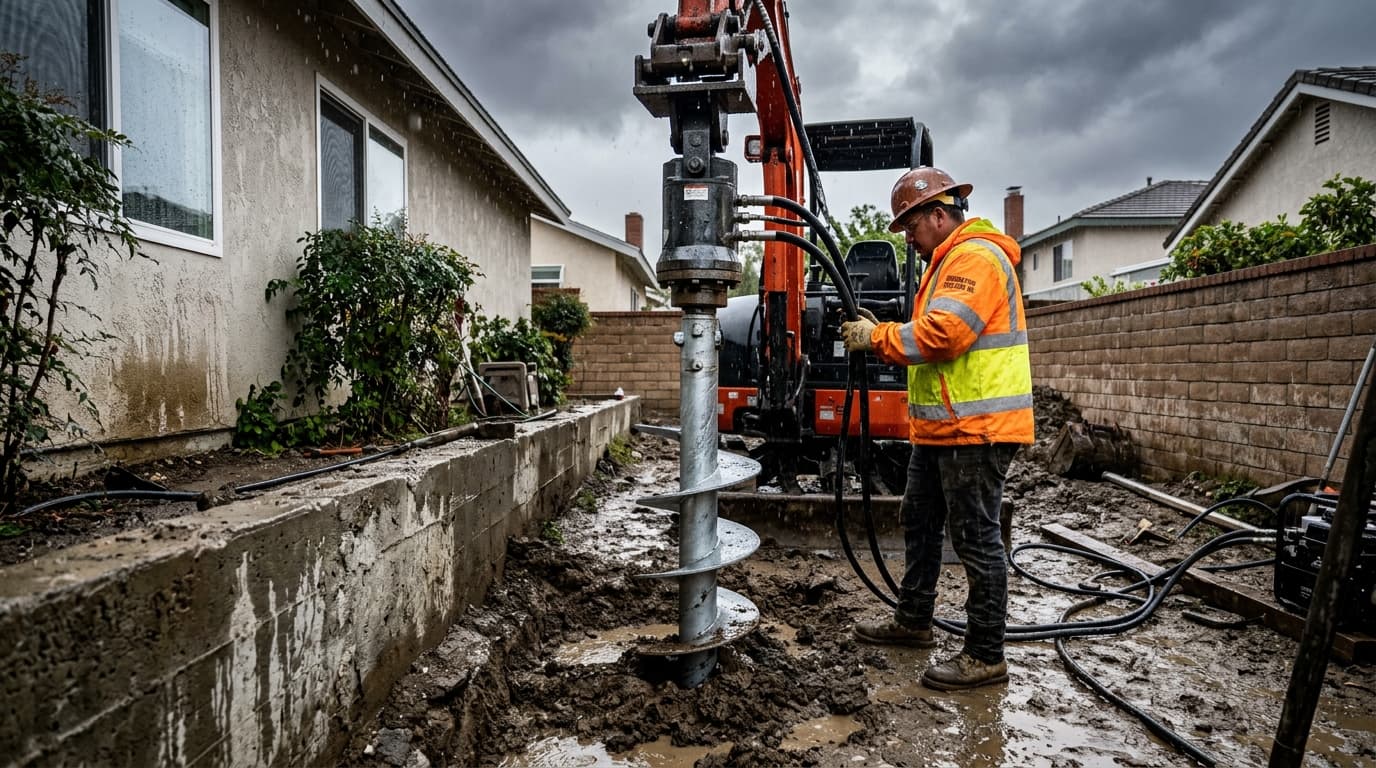
Discover why helical piers can be installed in rain, winter, or dry summer soil. Learn about the technical advantages of steel piles over concrete under variable weather.
Table of Contents
Foundation issues don't wait for sunny weather. Soil settlement and mudsill cracking can accelerate during heavy Southern California winter rains. However, homeowners often delay foundation repairs, fearing that rainy weather or wet soil will ruin concrete work or halt construction.
The solution is the steel helical pier. Unlike traditional foundation repair methods, helical piers can be installed in almost any weather condition.
At PiersPro (CA GC License #1110475), we perform foundation repairs year-round. This guide explains why helical pier installation is weather-resistant and how steel piles outperform concrete during bad weather.
1. Zero Concrete Curing Time
Traditional concrete piers require digging large holes, pouring concrete, and waiting 7 to 28 days for the concrete to cure and dry. If it rains during the pour, the concrete is weakened.
* Helical Piers: Are solid steel piles driven directly into the ground. There is no concrete pouring, meaning zero curing time and no delay from rain. We can load and lift the foundation immediately.
2. Torque-Monitored Driving Through Wet Soil
Helical piers are screwed into the ground until they reach deep, load-bearing strata (typically 15 to 30 feet deep). Wet surface soils do not impact the load capacity of the pier, as the pier transfers the weight of the house past the wet topsoil down to dense, dry soils below.
3. Minimal Soil Disturbance
Traditional underpinning requires massive excavations that turn into mud pits during rain. Helical pier installation requires only small, 3x3-foot excavation holes next to the footing, minimizing soil erosion and footprint disturbance.
---
Mid-Content Call to Action
Don't let wet winter soils damage your home's foundation.
Schedule an inspection today. PiersPro offers a $99 Instrumental Diagnostic (credited to your contract) to evaluate your foundation and crawl space. We install EBB-compliant retrofits and helical piers in any weather.
Schedule a Foundation Inspection or call (213) 583-6669 to speak with our team.
---
Comparison: Underpinning Methods in Bad Weather
| Construction Feature | Steel Helical Piers | Poured Concrete Underpinning |
|---|---|---|
| Weather Constraints | None (can install in rain or heat) | Rain delays (concrete cannot be poured in rain) |
| Curing Delay | 0 days | 7 to 28 days |
| Site Impact | Minimal (3x3' excavation holes) | Severe (large trenches prone to collapse in rain) |
Frequently Asked Questions (FAQ)
Q1: Can you install helical piers in heavy rain?
A1: Yes. Heavy rain may slow down the crew, but it does not affect the engineering integrity of the steel piers.
Q2: Does wet soil affect torque measurements?
A2: Soil moisture can slightly reduce rotational friction in the upper clay layers, but as the helical plates reach the deep load-bearing strata, the torque readings stabilize, ensuring accurate load capacity calculations.