
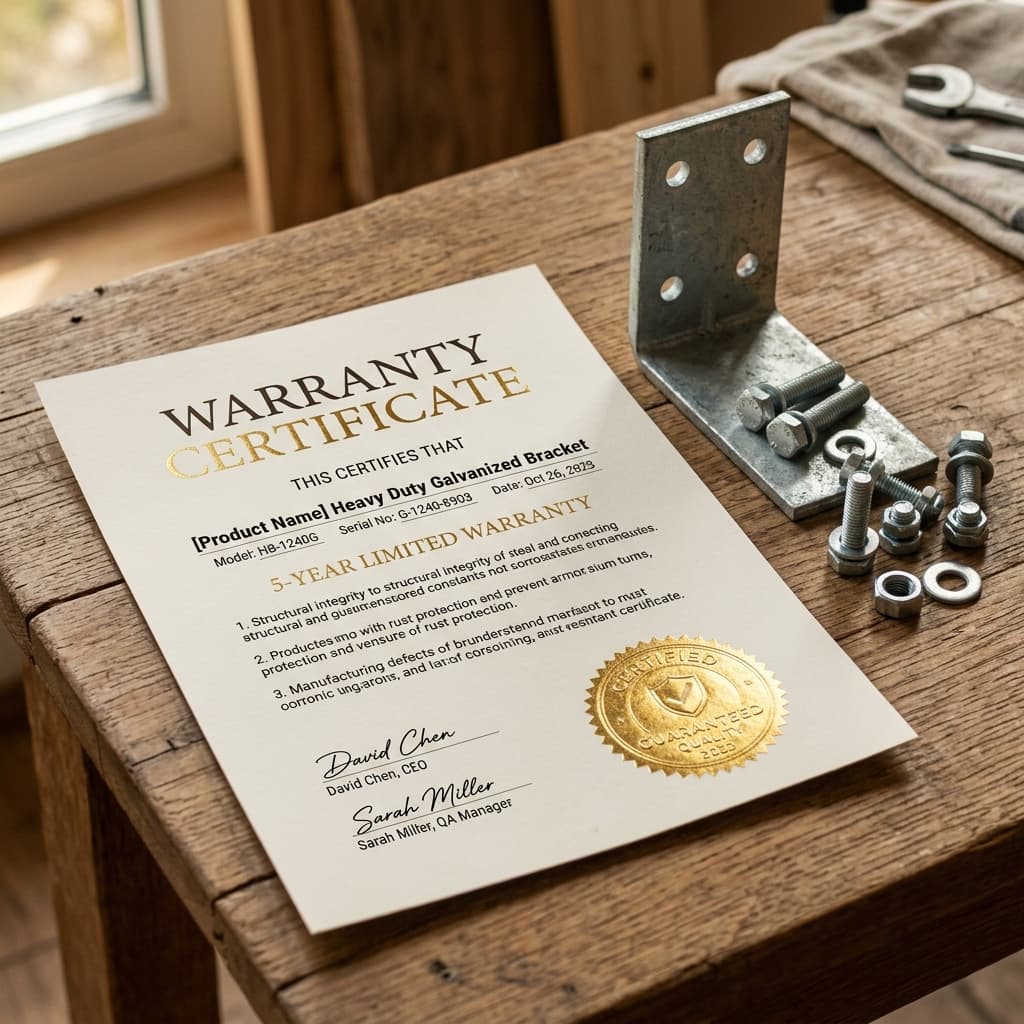
Learn what to look for in a foundation repair warranty. Discover the difference between contractor guarantees, transferable warranties, and closed city permits.
Table of Contents
When investing in foundation stabilization, homeowners need long-term peace of mind. Soil movement and foundation settling are structural issues, meaning repairs must stand the test of time. A foundation repair estimate is only as good as the warranty and permit closeout that supports it.
At PiersPro (CA GC License #1110475), we provide a lifetime structural warranty on our steel helical pier installations. In this guide, we explain what a real structural guarantee looks like, how transferable warranties protect property values, and why city permits are the ultimate verification.
1. The Lifetime Structural Warranty
A reputable foundation contractor should guarantee that their piers will hold the building footing without further settlement.
- What it covers: Structural deflection, weld integrity, and bracket stability.
- Galvanized Steel: Look for hot-dip galvanized steel piers (standard at PiersPro) that resist soil corrosion for 75+ years.
2. Transferable Warranties (Adding Property Value)
If you decide to sell your home, foundation repairs must be disclosed. A non-transferable warranty is useless to a home buyer and can lower property value. A transferable warranty transfers automatically to the new owner, maintaining buyer trust and protecting the sale value.
3. Closed Building Permits
A warranty from a contractor is meaningless if the work was unpermitted. In California:
- All foundation stabilization projects require structural engineering calculations, plans, and city permits (LADBS/OC).
- Upon project completion, a city building inspector must visit the site, inspect the piers, and close the permit.
- A closed permit is your official legal proof of compliance.
Are you dealing with foundation settlement issues?
Work with a licensed, certified team. PiersPro provides complete engineering, permits, and lifetime transferable warranties. Schedule our on-site inspection from $99 (credited to your contract) to evaluate your home.
Schedule a Foundation Diagnostic or call (213) 583-6669 to speak with our structural team.
Summary: Warranty and Permit Checklist
| Checklist Item | Why It Matters | PiersPro Standards |
|---|---|---|
| Active CA License | Confirms contractor is registered with CSLB | Active License #1110475 |
| Transferable Warranty | Protects home resale value for new buyers | Fully transferable lifetime structural warranty |
| City Building Permits | Legal compliance and structural sign-off | Complete engineering and closed permit coordination |
Questions to Ask About Any Warranty
| Question | Why it matters |
|---|---|
| What exactly is covered? | Pier performance, brackets, or the whole foundation |
| What is excluded? | Other sections of the house, drainage, cosmetic cracks |
| Is it transferable, and how? | Some require notice or a fee at sale |
| What must the owner do to keep it valid? | Maintaining drainage is a common condition |
| Is it in writing, with the pier locations? | A warranty you cannot produce is hard to rely on |
What a Warranty Does Not Replace
- The permit record. Final sign-off shows the work was built to the approved plan.
- The installation log. Depth and torque for each pier are the technical proof.
- Drainage. Piers hold the section they support; water can still move other parts of the house.
Keep a File
Estimate, engineering, permit and sign-off, pier log, warranty and before and after elevation readings. A buyer's inspector will ask for exactly these.
Frequently Asked Questions (FAQ)
Q1: Does a warranty cover interior drywall cracks?
A1: No. Drywall cracks are cosmetic. A foundation warranty covers the concrete footing and structural load paths, guaranteeing that the piers will not settle or shift.
Q2: How do I transfer a foundation warranty to a new owner?
A2: At PiersPro, the warranty transfers automatically to the new property deed. The new owner simply needs to contact us with proof of sale to update our records.
Q3: What happens if a contractor goes out of business?
A3: This is why city permits and third-party engineering calculations are vital. Even if a contractor closes, a permitted, engineered helical pier system remains a certified asset that satisfies home inspectors and banks.
Q4: Does a warranty cover parts of the house that were not piered?
A4: Normally not. It applies to the section that was underpinned. Movement elsewhere is a separate matter, which is why drainage is addressed with the repair.
Prices and ranges in this article are approximate and for planning only, and every project is priced individually. The final cost is determined only after an on-site estimate and may differ from the figures shown on this site.
Permit rules, fees, codes and deadlines vary by city and county and change over time. Please confirm the details with the building department of your city or county before starting work.
About the author: This article was prepared by the PiersPro team. PiersPro is a d/b/a of SKILL SEE SERVICES INC, a California licensed contractor (Class B, CSLB #1110475). Verify the license on the CSLB website.