
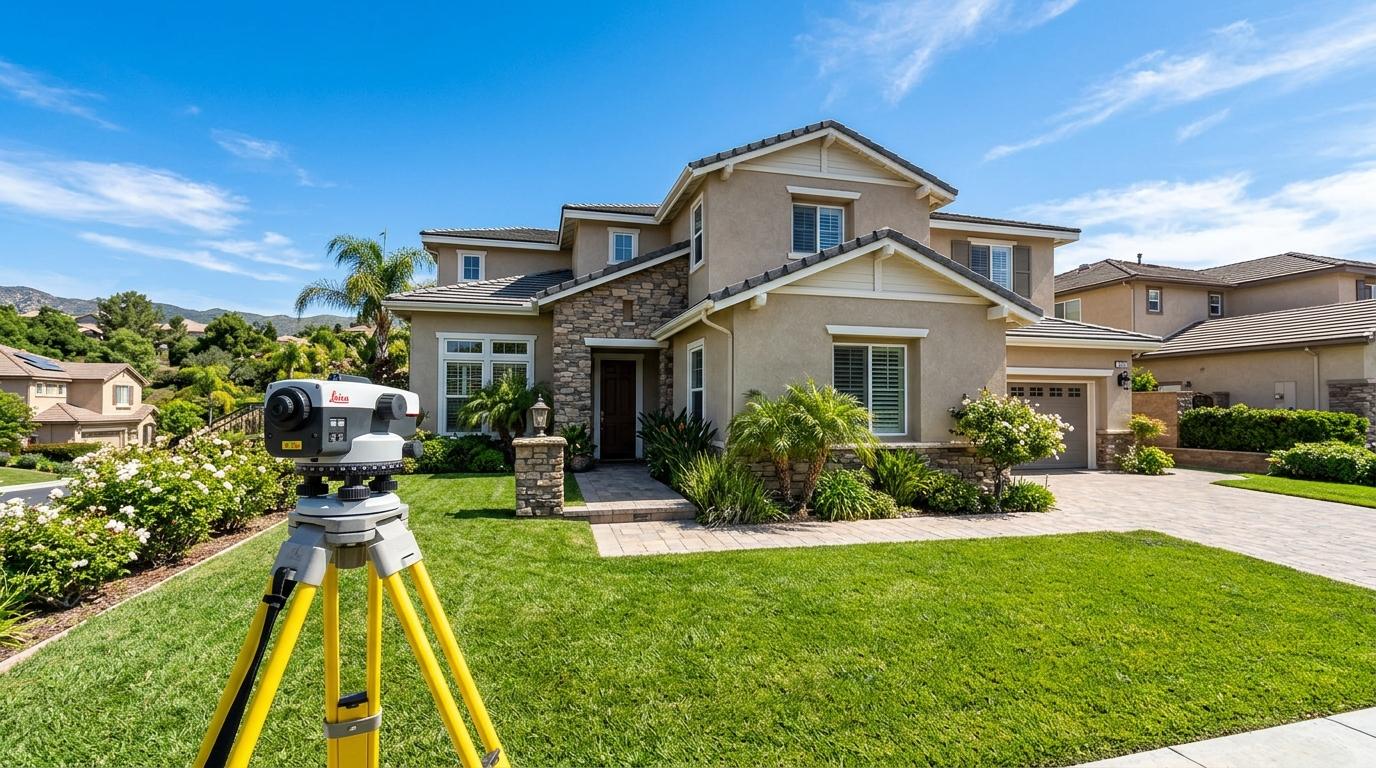
Buying a hillside home in Diamond Bar? A foundation inspection with a written report gives you numbers for escrow before your contingency period ends.
Table of Contents
A pre-purchase foundation inspection in Diamond Bar tells you, in measurements, what the general home inspection only hints at. A general inspection covers the whole house in a few hours. When the inspector sees a sloping floor or a cracked stem wall, the report usually says one thing: "recommend evaluation by a foundation specialist." That sentence is your signal to get real numbers while you can still negotiate. Order the foundation inspection in the first days of your contingency period, get the findings in writing with an itemized repair estimate, and use them to ask for a credit, plan the work or walk away.
Why it matters on a hillside lot in Diamond Bar
Much of Diamond Bar is built on slopes. Hillside homes come with things flat-lot homes do not have: graded pads, retaining walls, slope drainage and long downhill footings. Each one can be perfectly sound or a five-figure repair, and from the driveway they look the same.
Two local conditions make the check worth the time:
- Age of the housing. Many Diamond Bar tracts were built in the 1970s and 1980s. Decades of irrigation, roof runoff and seasonal soil movement have had time to show up as settlement.
- Soil. Lots here sit on decomposed granite and expansive clay. Clay swells when wet and shrinks when dry, so a house can move a little every year. Read more in our guide to expansive clay soil.
What a foundation inspection adds to a home inspection
| General home inspection | Foundation inspection | |
|---|---|---|
| Scope | Whole house: roof, plumbing, electrical, HVAC | Foundation, floor levels, drainage, retaining walls |
| Floor levels | Noted by eye | Measured elevation readings across the house |
| Cracks | Listed | Width, offset and pattern recorded, likely cause explained |
| Repair cost | Not included | Itemized written estimate |
| Typical conclusion | "Recommend evaluation by a specialist" | What is wrong, what it takes to fix, what can wait |
In practice the foundation inspection covers:
- Floor elevation survey: measured readings show how far out of level the house is and where.
- Crack assessment: which cracks are shrinkage and which show settlement or lateral pressure. See which signs of foundation problems matter.
- Crawl space or slab edge review: condition of concrete, posts, piers, girders and moisture levels.
- Drainage and grading: where roof and surface water goes, and whether it runs toward the foundation.
- Retaining walls and slope: leaning, cracking, blocked weep holes.
What you get for escrow
A written report with findings, photos and an itemized repair estimate. Buyers use it three ways:
- Negotiate: ask for a price reduction or a seller credit backed by a line-item estimate.
- Plan: know what must be done now and what can wait.
- Walk away informed: some houses are not worth the repair cost.
A written report with measurements carries more weight in a request for repairs than a verbal opinion, and it gives your agent something concrete to send to the seller. If you are on the other side of the deal, see our notes on selling a house with foundation repair.
Cost and timing
Order the inspection in the first days of your contingency period. That leaves time for the report, a request for repairs and the seller's response.
- Visual inspection: from $99 for homes up to 1,000 sq ft. It does not include a crawl space check or a written report, so it suits an owner who wants a quick opinion, not a buyer in escrow.
- Instrumental inspection with a written report and itemized estimate: from $250. This is the one buyers need.
If you later hire PiersPro for the foundation repair, the inspection fee is 100% credited toward the job. For a full breakdown see what a foundation inspection costs in Los Angeles.
In escrow on a Diamond Bar home? Book a foundation inspection and get the report before your contingency deadline.
Frequently Asked Questions
Q1: Is a general home inspection enough when buying a hillside home?
A1: Usually not. A general inspector notes visible symptoms and refers you to a specialist. A foundation inspection measures floor levels, records cracks and drainage, and prices the repair, which is the information you need to negotiate.
Q2: When should I order the foundation inspection?
A2: In the first days of the contingency period. You need time to receive the written report, send a request for repairs or a credit, and get the seller's answer before the deadline in your purchase contract.
Q3: Can the seller be asked to pay for foundation repairs?
A3: That is a negotiation between buyer and seller. Buyers commonly ask for a price reduction or a credit and attach the itemized estimate. Your real estate agent handles the request; the report supplies the numbers.
Q4: Is the inspection fee refunded if I buy the house?
A4: The fee is not refunded, but it is credited in full toward the repair contract if you hire PiersPro for the foundation work on that property.
Prices and ranges in this article are approximate and for planning only, and every project is priced individually. The final cost is determined only after an on-site estimate and may differ from the figures shown on this site.
Permit rules, fees, codes and deadlines vary by city and county and change over time. Please confirm the details with the building department of your city or county before starting work.
About the author: This article was prepared by the PiersPro team. PiersPro is a d/b/a of SKILL SEE SERVICES INC, a California licensed contractor (Class B, CSLB #1110475). Verify the license on the CSLB website.