
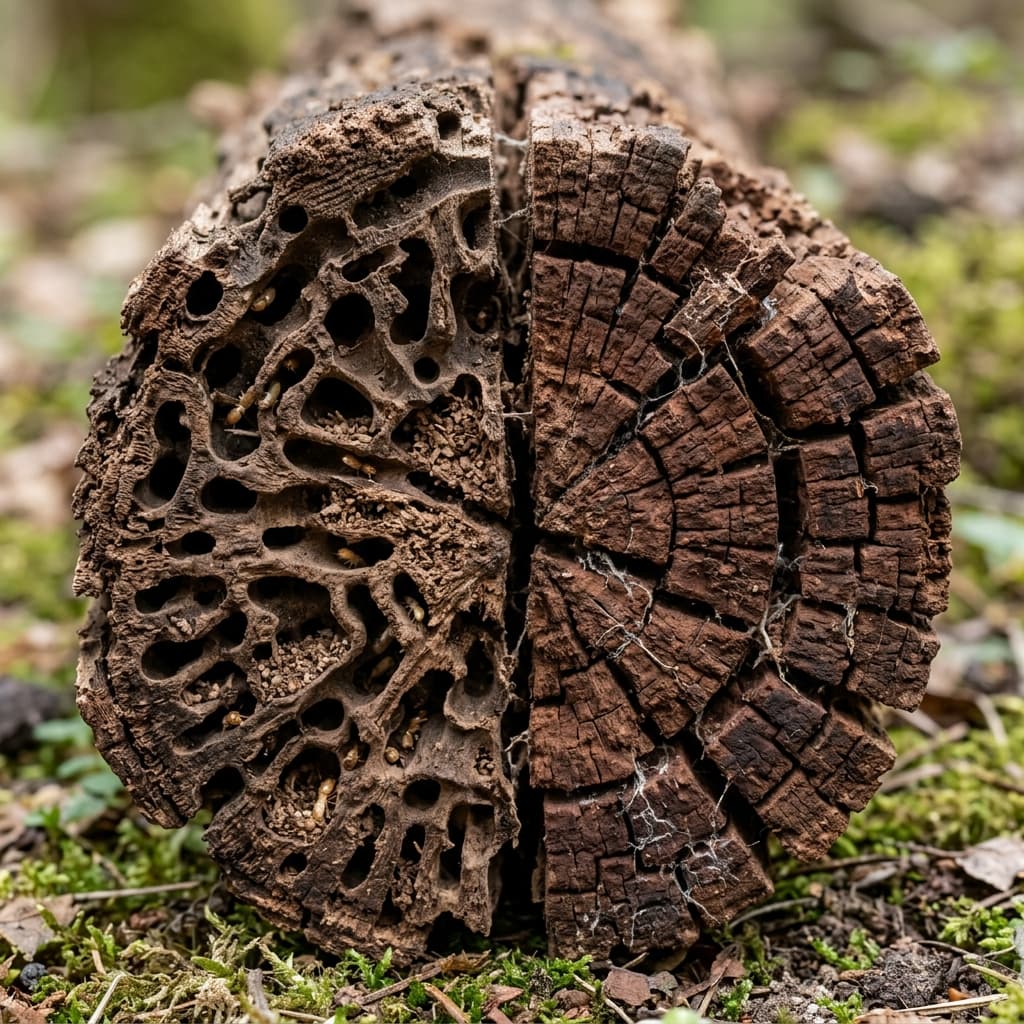
Learn how to tell the difference between structural termite damage and dry rot in your home's framing. Discover diagnostic methods, wood species risks, and repair options.
Table of Contents
For homeowners with raised foundations, crawl space wood framing is vulnerable to two major structural threats: subterranean termites and dry rot. Both hazards consume wood fibers, destroying the structural load-bearing paths of the home.
However, because these issues require different repair and mitigation methods, identifying the correct cause of wood decay is vital.
At PiersPro (CA GC License #1110475), we provide non-destructive wood diagnostics using digital Resistograph testing. In this guide, we explain how to tell the difference between termite damage and dry rot, and how we repair load-bearing timbers.
How to Identify Termite Damage
Termites are insects that eat wood from the inside out, leaving the exterior wood surface looking healthy.
* Galleries and Voids: Termites eat along the wood grain, leaving hollow tunnels (galleries) filled with soil and waste.
* Frass: Drywood termites eject small, sand-like pellets (frass) from tiny holes in the wood.
* Mud Tubes: Subterranean termites construct mud tubes along concrete foundation walls to access crawl space wood.
How to Identify Dry Rot
Dry rot is a fungal decay that consumes wood cellulose, leaving the timber dry, crumbly, and brittle.
* Cubical Cracking: Affected wood develops deep cracks along and across the grain, breaking the timber into blocky chunks.
* Fungal Growth: Active rot shows white or gray sheet-like growth (mycelium) and orange spore dust.
* Musty Smell: A damp, earthy odor is present around the decayed wood.
---
Mid-Content Call to Action
Do you suspect wood rot or termite damage under your house?
Get a scientific, honest assessment. PiersPro offers a detailed $99 Instrumental Diagnostic featuring Resistograph density scanning. The $99 is credited to your contract if repairs are performed.
Schedule a Wood Diagnostic or call (213) 583-6669 to speak with our structural specialists.
---
Technical Comparison: Termites vs. Dry Rot
| Feature | Termite Damage | Dry Rot (Fungal Decay) |
|---|---|---|
| Cause | Insect infestation | Wood-decaying fungi (requires moisture) |
| Wood Texture | Hollow tunnels; exterior surface looks sound | Crumbly, dry, breaks into blocky chunks |
| Waste Signs | Mud tubes or sand-like frass pellets | Orange spore dust and gray mycelium sheets |
| Repair Method | Extermination + sistering or replacement | Moisture fix + borate treatment + sistering |
Frequently Asked Questions (FAQ)
Q1: Can a termite inspector certify dry rot repairs?
A1: No. Pest control companies handle extermination, but structural wood reinforcement (sistering or girder replacement) must be completed by a licensed general contractor (like PiersPro).
Q2: What wood species are rot-resistant?
A2: Redwood and pressure-treated Douglas Fir are highly resistant to fungal decay, but they can still be damaged by termites if moisture levels are high.